










09.09.2026
5 Types of Job Interviews and How to Pass Each

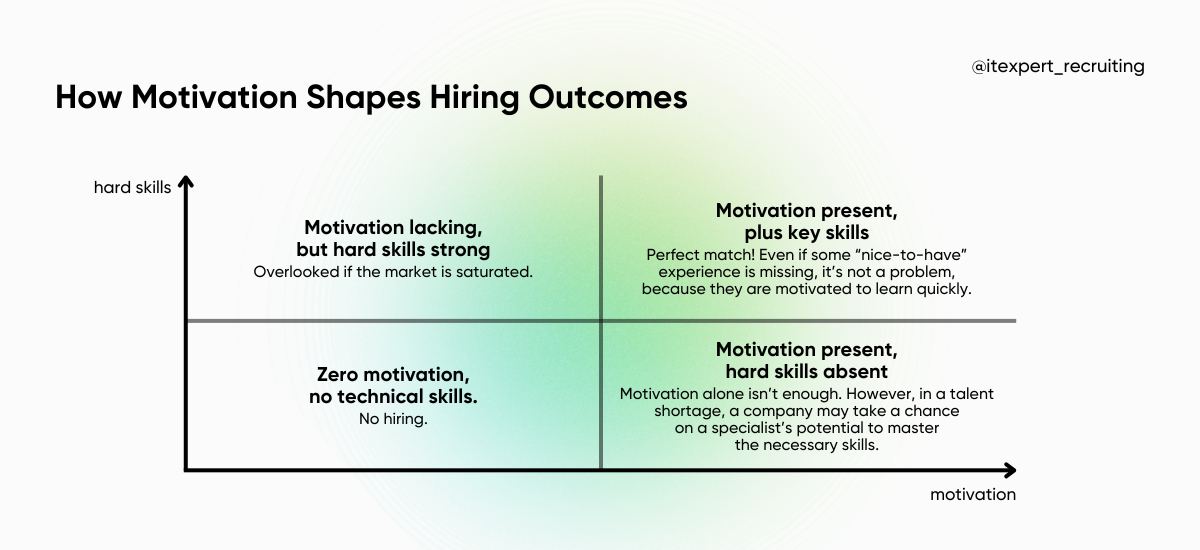
Have you ever met a candidate with a flawless skill set — someone the market fought over — yet the hire still fell flat? Or, on the flip side, a junior with a spark in their eyes who consistently closed tasks on time and quickly earned a promotion? That’s not just about experience or hard skills. That’s about motivation — the trigger that can make or break a hire, even when the CV is impeccable.
And while the classic interview question “What motivates you?” gets asked all the time, figuring out whether you’re seeing genuine interest or a well-rehearsed act is a whole different challenge. In this article, I’ll explain why companies put so much weight on motivation and how candidates can demonstrate it without overplaying their hand.
A motivated professional isn’t simply someone who logs long hours or churns through tasks. It’s a person with an inner drive — someone who adapts to change, shows initiative, and thrives even without a clear playbook.
✅ Motivation unlocks the full potential of a candidate’s hard skills. A very rough illustration: most people working on space missions had never actually flown to the Moon. What they did have was the right technical background (working with rockets 🙃) and sufficient motivation to complete unique tasks and push through the unknown.
In IT, as in many other fields, challenges are rarely cookie-cutter. Decisions must be made quickly, new data absorbed, and progress maintained without a manager constantly looking over your shoulder. The desire to do the job well under these conditions is priceless — and it stems directly from the right motivation.
❌ Now picture the opposite: a technically gifted candidate who doesn’t care about the product or the team. They’ll show up, deliver the bare minimum, avoid initiative, self-development, and won’t suggest improvements. In the long run, they won’t become a valued and retained core employee.
Why motivation is a must:
The logical outcome: all else being equal, employers will always choose the more motivated candidate.
One popular myth: a motivated candidate is someone who works nights and weekends nonstop. However, long hours don’t always equate to genuine engagement.
In my opinion, there are two types of overtime:
But not everyone distinguishes between them. In the end, job ads pop up asking for “shining eyes + ready to work 24/7 for $400.” The problem isn’t that specialists don’t want to work — it’s in the expectations. If a company prioritizes screen time over actual impact, it risks losing its strongest talent. Motivation reveals itself in far broader ways than overtime.
Here’s the twist: you don’t need to look motivated. You need to be motivated. This means your goal isn’t to wow the recruiter or hiring manager with exaggerated enthusiasm, but to assess your own fit with the employer — and then convince the manager that hiring you is the right move (in that order).
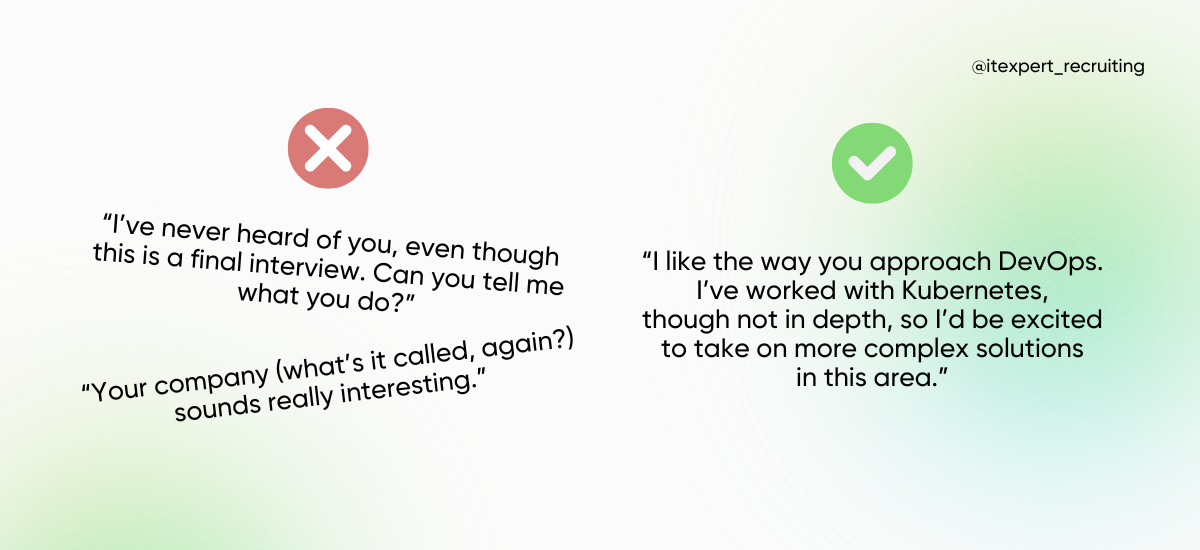
But if a candidate leans on stock phrases like “I want to grow” or “I’m interested in your company,” the effect is flat. It feels rehearsed, as if they’re trying too hard to impress. That kind of overplay reads as inauthentic.
So how do you strike the balance?
What actually works:
If the company has a visible public brand (a flagship product or a CEO who frequently speaks at conferences), the need for preparation is even sharper. If it’s a quieter business, at least nail down the basics: its focus, its clients, and its tech stack.
Exception: Junior candidates. For early-career candidates, it’s perfectly fine if motivation is simply “to break into the field.” Beginners often lack a nuanced understanding of the various IT companies. Senior candidates, on the other hand, should be able to focus on concrete challenges and their potential impact on the business.
Warning signs of overdoing it:
A candidate shouldn’t perform interest — they should understand why they want the job. If they do, a recruiter will notice.
And of course, if you’ve burned out to the stage of feeling like “a pile of cold ash,” don’t fake enthusiasm. Take a pause, recharge, and ask yourself: What actually excites me? Where do I see my career heading?
Only once you’re clear on your own goals can you choose a company that resonates with them. That’s when your motivation becomes authentic rather than performative. And the authenticity is what makes for a true match — the kind where both sides win.
Spotting shallow or absent motivation is possible right at the interview stage. If a candidate can’t articulate what drives them in work — or their answer feels too generic — that’s a reason to be wary.
For me, these include:
When you hear these answers, don’t rush to reject outright. Better ask again, try to expand on their answer. Often, nerves make candidates sound vague. With follow-up questions, they may open up and reveal fundamental drivers.
How can you tell if the person sitting across from you genuinely wants the job — or is simply ready to accept the first offer that comes along?
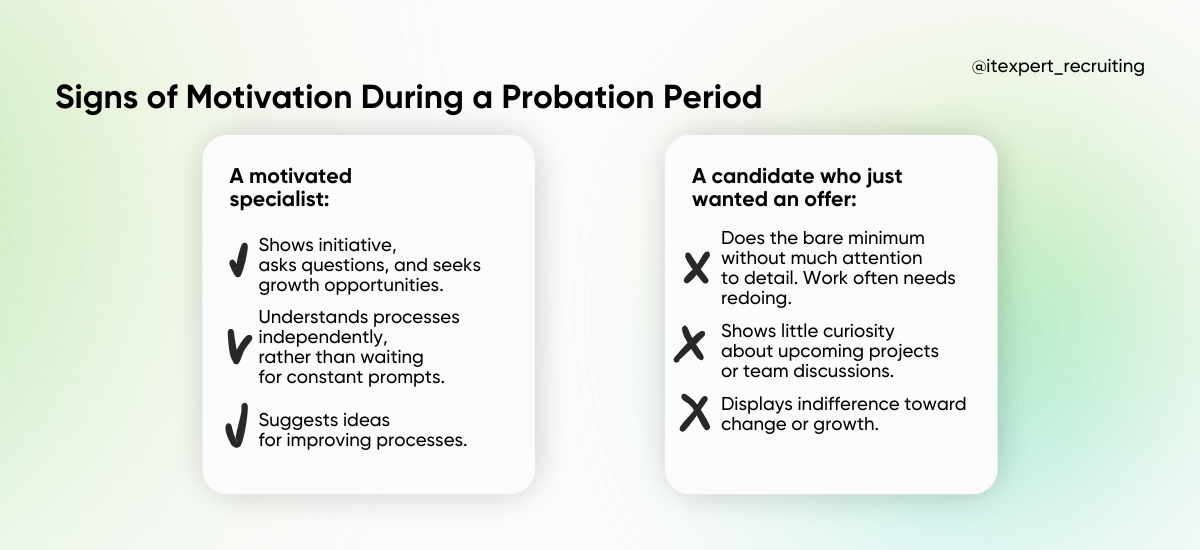
However, even a thorough approach to the interview does not provide guarantees. The real picture emerges only during the probationary period.
Sometimes, you can reignite a candidate’s motivation. The point isn’t to manufacture drive from nothing, but to revive what’s been temporarily dampened. Often, a candidate comes across as disengaged, not because they’re the wrong fit, but because they’ve had a series of unsuccessful experiences: a toxic team, micromanagement, or a loss of faith that their voice matters.
In such cases, proper communication and atmosphere can make a significant difference.
When does this work?
To “rekindle” in this sense is to talk through expectations and highlight what your company offers. The key insight: you can’t force someone to want. But you can help them see why your company is worth their effort. And sometimes, that’s enough to reignite the spark.
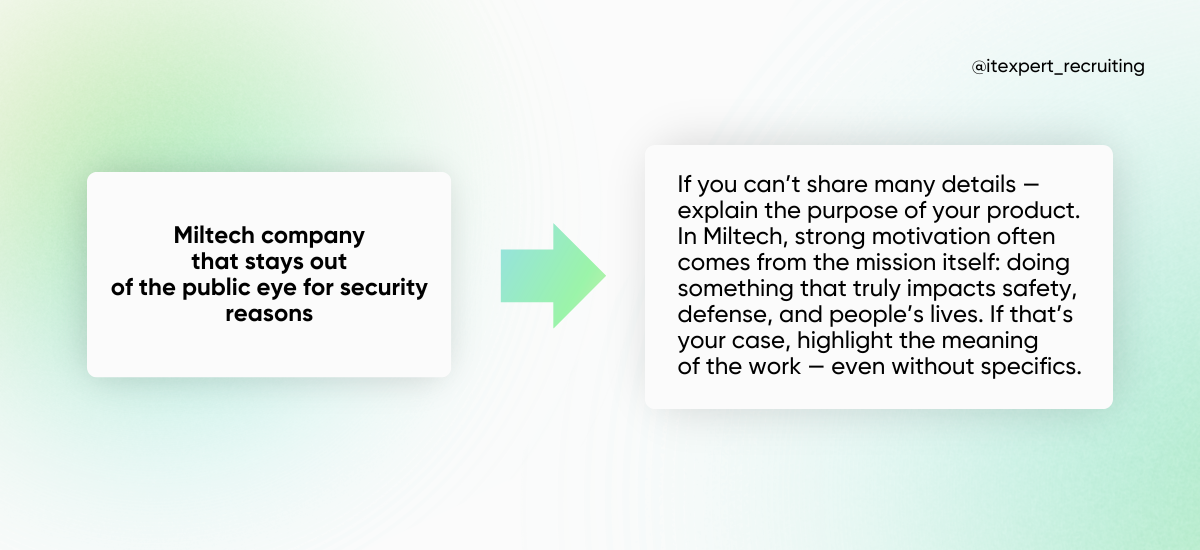
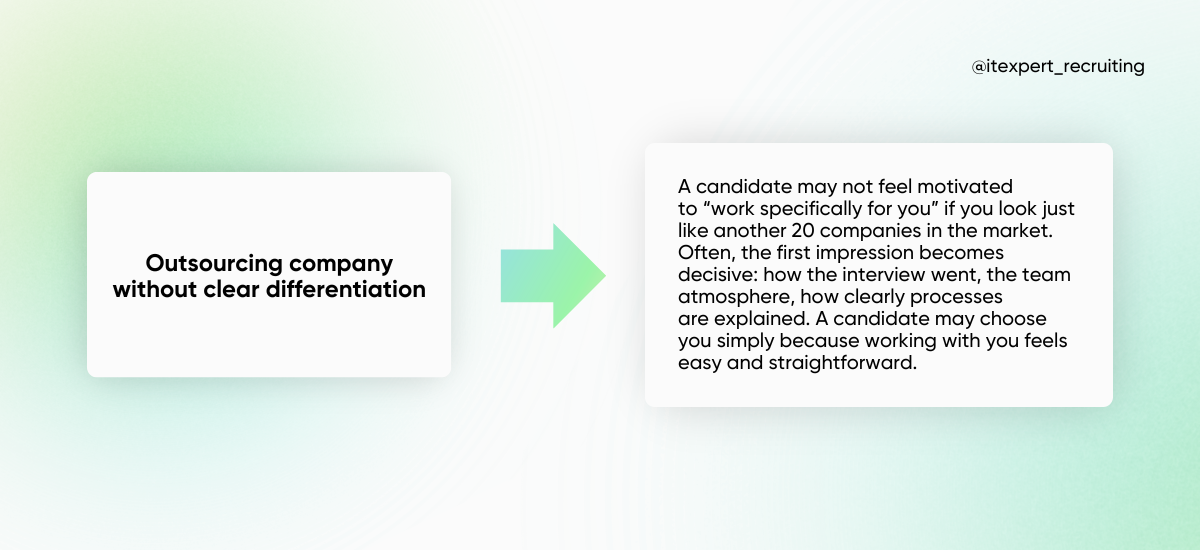
Often, companies expect candidates to arrive already brimming with enthusiasm, having memorized the website and ready to recite the mission better than HR, with glowing praise for the product. But this only works if you have something inspiring to show.
Just as a candidate must “sell” themselves, a company must also “sell” itself to the candidate. If you want to see eyes light up, give people something worth getting excited about.
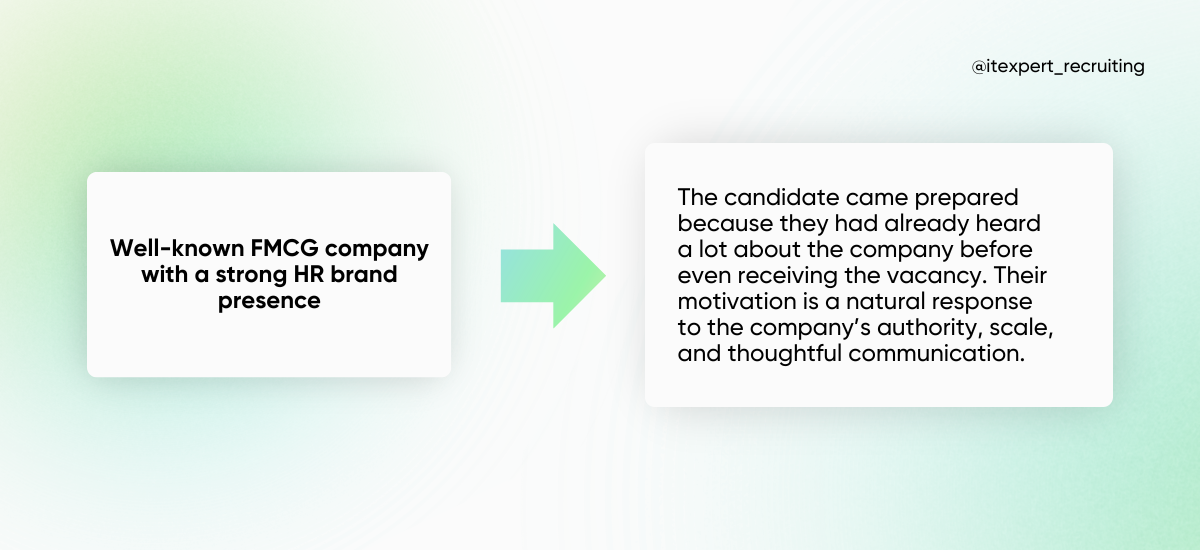
What’s the dividing line between companies that attract talent — and those that talent quietly passes by?
Before you expect deep motivation from a candidate, think about what actually sparks it in your company. If it’s not scale, then it’s the atmosphere. If it’s not the brand, then it’s the meaning behind the work. But there has to be something. And your job is to help them see it.


