





18.08.2026
How Loyal Are Your Employees: Using eNPS Surveys to Calculate Employee Loyalty

Teams don’t burn out just because of long hours or heavy workloads. More often, burnout stems from something subtler — the absence of predictability, clear boundaries, and genuine mental health support.
For HR managers and team leaders, the challenge is to design an environment where productivity and well-being work hand in hand, not against each other. This means:
This article explores practical strategies to help you build an ecosystem of healthy productivity — and offers guidance on how to restore mental energy when your own reserves start to run low.
Mental health in the workplace remains one of the most delicate topics. On one hand, companies cannot — and should not — interfere in employees’ personal lives. On the other, the workplace itself often becomes a major source of stress when support, empathy, and conflict resolution are lacking.
A manager’s role isn’t to solve personal problems but to create conditions that sustain psychological well-being day to day. The balance lies where care doesn’t turn into control, and support doesn’t cross into intrusion.
Here is how leaders can maintain that boundary while still building a culture that genuinely protects mental health.
One of the most common mistakes managers make is trying to fix a stressed colleague by asking, “What’s wrong?” or encouraging them to open up before they are ready. While well-intentioned, such conversations can create more pressure and lead to withdrawal rather than relief.
It’s essential to remember that employees have the right to privacy — to remain silent about what they are going through and to seek help only when they choose to. Instead of pushing for dialogue, focus on creating supportive structures that make help accessible on their terms:
When trust defines a company’s culture, people don’t hesitate to take a day off to recover, ask for help with a task, or adjust their workload without guilt. They know that well-being isn’t seen as a weakness — and as a result, they bounce back faster and return more motivated.
A manager isn’t a psychologist — nor should they try to be. But a good leader can notice when someone is struggling and respond with empathy. Common signs of emotional or mental overload include:
When these signals appear, respond with understanding rather than judgment. A simple approach might be: “I’ve noticed things seem a bit tougher for you lately. Maybe we can adjust your workload or give you a couple of days to recharge?”
It’s equally important to train leaders to refer employees to professional support when appropriate — whether that means a corporate psychologist, a wellbeing consultant, or coaching services if available.
Define what falls within the company’s responsibility — and what remains personal. For instance, the organization can provide access to support resources, flexible schedules, and a psychologically safe environment, but it should not intervene in private matters. Such principles are best documented in the company’s wellbeing policy or psychological safety guidelines, ensuring that everyone understands where care ends and personal privacy begins.
Team mental health doesn’t start with therapy sessions — it starts with how a company is structured. When internal processes are clear, boundaries are respected, and expectations are transparent, the brain doesn’t waste energy on constant decision-making or firefighting. That clarity reduces anxiety, prevents cognitive overload, and helps people focus on meaningful work.
Here are nine practical approaches to time management, communication, and team organization that will help reduce stress and sustain concentration — creating a workplace where productivity and mental wellbeing coexist naturally.
A culture that glorifies “heroes” who pull all-nighters to meet deadlines isn’t a sign of dedication — it is a symptom of flawed planning. When companies reward constant overtime, they reinforce a toxic belief: “As long as the job gets done, burnout will somehow fix itself.” Spoiler: it won’t. Sooner or later, those “heroes” burn out, leave, and often share their frustration publicly — costing the company its reputation, stability, and experienced talent.
To prevent this, hold brief weekly workload reviews to rebalance tasks and adjust deadlines if priorities shift. Break large projects into smaller deliverables to monitor progress without triggering last-minute chaos. Measure success by both outcomes and sustainability — not only whether the project was completed on time, but whether the team maintained quality without exhaustion.
In many teams, meetings and quick check-ins consume most of the day, leaving little time for meaningful, focused work. Deep concentration, however, is essential for both creativity and problem-solving.
Introduce maker slots — dedicated time blocks in everyone’s calendar (for instance, 10AM to 1PM) when no meetings, calls, or interruptions are allowed. These hours become sacred for deep work — the kind that moves projects forward and reduces the mental fatigue of constant context-switching.
An excess of meetings is one of the biggest drivers of workplace fatigue. Follow a simple rule: if an issue can be solved with a message, it doesn’t need a meeting — even if the impulse to “discuss it live” feels strong.
Before scheduling a call, ask yourself: Is there a clear purpose and expected outcome? Are all the invited participants truly needed to make a decision? If not, summarize updates in a message or share outcomes later in a team or all-hands meeting.
The brain can’t sustain deep focus indefinitely. Long periods of sitting and uninterrupted work increase cognitive load, leading to fatigue and stress. To maintain productivity, build short breaks every 60–90 minutes into the team’s schedule — even 5–10 minutes is enough for the brain to reset.
Encourage quick physical activities once or twice a day, such as a 5-minute walk, stretching, or a brief yoga session. Use calendar reminders or messaging app alerts to make these microbreaks a habit, helping the team recharge consistently.
Endless notifications, multiple channels, and long message threads create a constant background anxiety: “Am I missing something important?” Combat this by introducing a communication hygiene guide — clear rules on when and how to message colleagues, and when it’s better to wait.
For example, no Slack messages or emails after 6PM; managers avoid sending clarifications outside of work hours. Use Scheduled Send features in Slack to respect boundaries while planning communication in advance. Assign channels for specific purposes: project updates, administrative matters, informal chat, etc. Clear guidelines reduce mental clutter and let employees focus without the stress of constant interruptions.
After completing a large project, teams often experience an emotional “downturn.” Jumping straight into a new deadline can increase burnout risk.
Plan mini-sabbaticals or recovery periods — 2–3 days for home rest, team retrospectives, workshops, offline meetings, or informal relaxation. Giving the brain time to transition from “maximum mobilization” to a recovery state helps employees recharge, maintain motivation, and return ready to tackle the next challenge.
Reducing the workweek can have a dramatic impact on productivity, focus, and mental health. In 2018, New Zealand company Perpetual Guardian ran a large-scale experiment: a 30-hour workweek with full pay. The results were striking — productivity increased by 20%, stress levels dropped from 45% to 38%, and employees’ sense of work-life balance rose from 54% to 78%.
Similar experiments in Reykjavik, Iceland (2016) showed that shortening the workweek by 4–5 hours maintained stable productivity while reducing sick leave. The concept has also been highlighted by thought leaders, including Adam Grant and Rutger Bregman, at the 2019 World Economic Forum in Davos, emphasizing that a shorter week fosters focus, creativity, and loyalty.
If a full transition isn’t feasible yet, consider piloting a shorter week: make every first Friday of the month a day off. Rotate teams to ensure operations continue smoothly. Track metrics before and after the trial, including completed tasks, error rates, customer satisfaction, and wellbeing survey results.
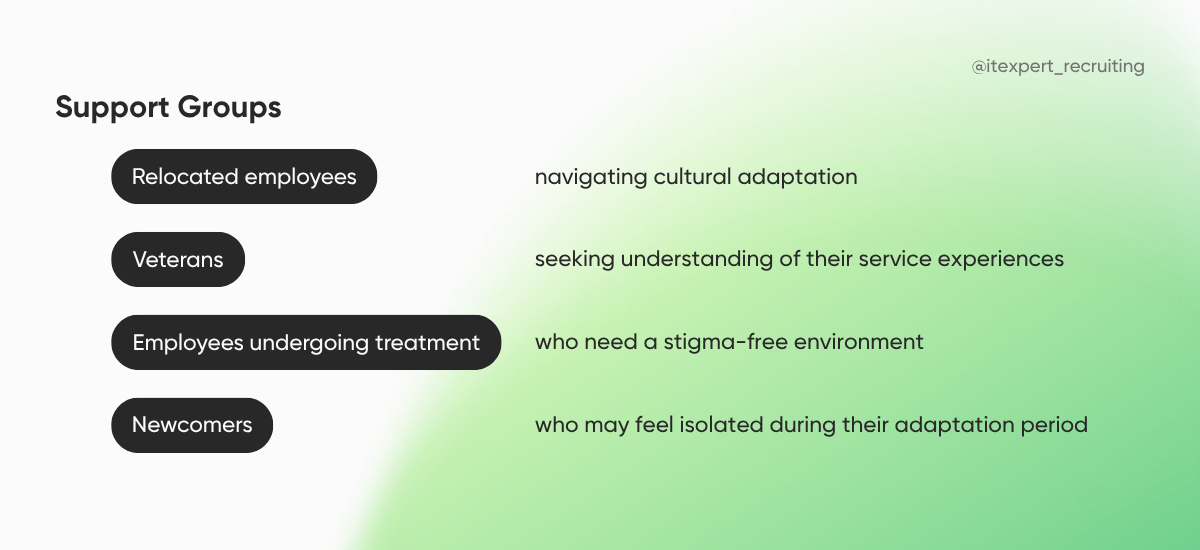
Many large companies have successfully created wellbeing support groups that connect employees facing similar experiences, providing understanding, empathy, and a safe space to share:
These groups can take different formats: peer-to-peer sessions, where participants share experiences on equal footing, moderated sessions, with clear safety and confidentiality guidelines, or hybrid formats, meeting online regularly with in-person gatherings quarterly. Such initiatives foster connection, reduce feelings of isolation, and contribute to a psychologically safe workplace.
Regularly monitoring mental wellbeing helps identify early signs of stress and prevent burnout. To do this effectively:
When you conduct wellbeing surveys, don’t stop at data collection — share the results with your teams and outline the actions you plan to take. This transparency shows that the company genuinely values employees’ wellbeing.
We all perform at our best when we’re not constantly juggling deadlines, notifications, and back-to-back check-ins. Supporting mental health isn’t a perk or an optional benefit — it’s a core element of a sustainable, healthy culture. When people know their mental wellbeing truly matters, they respond with loyalty, creativity, and lasting productivity.


