



04.03.2026
7 Recruitment Biases Even Seasoned Specialists Still Fall For

“It seems we don’t have enough resumes.” “We could hire faster.” “We are losing candidates because of the complicated hiring process.” These opinions may be true, but they lack rationale because they are not data-driven. This approach helps to strengthen opinions, make informed decisions, and save both money and nerves. Consequently, according to the Harvard Business Review Report, 51% of leaders believe that a data-driven culture is a critically important part of corporate strategy.
The professionals from ITExpert explain how to make data-driven decisions in recruitment to improve the process for both candidates and hiring managers.
Recruitment in every company goes through a stage of intuitive decisions and subjective assessments like “our benefits package is weak” or “let’s look at more candidates.” However, not every business progresses to the next level — a data-centric approach.
Data-driven solutions are a necessity in modern recruitment, not just a trend or a buzzword. This term refers to the approach of making management decisions based on big data and objective factors, which minimizes errors and allows you to pay attention to important insights that are often overlooked in day-to-day operations.

“A data-driven approach is always necessary! Analysis of experience gives us insight into how to act now or in similar future situations. For example, if using platform X for hiring a FinOps engineer didn’t yield the desired results in the past, we won’t use it again. Additionally, we know that cherry-picking candidates won’t be possible.”
In recruitment, the data-driven method helps to:

“The data-driven approach is highly effective for developing a search strategy. To illustrate this, when I began working on .NET positions, I noticed that a significant number of specialists were open to considering job vacancies because they actively responded to offers on LinkedIn. If I sent approximately 25 messages, around 5-7 candidates would express interest. In such cases, you can save time on sourcing by posting the vacancy on job portals. On the very first day, I received about 20 applications, was able to screen the candidates’ experience, and scheduled technical interviews.
In comparison, only 1–2 people (or sometimes none) might respond to a DevOps engineer position. Such vacancies, in my experience, need to be filled with targeted and personalized offers, which take much more time.
Another insight from my experience with the data-driven approach is that IT specialists tend to be more responsive on LinkedIn, whereas C-level executives prefer email communication. Therefore, it is important to always analyze which platforms and channels work for your vacancy. This analysis allows you to adapt your sourcing strategy and allocate your efforts effectively.”
In addition, data-driven recruitment (DDR) is about creating standardized processes that are easy to replicate and scale. If the team does not exceed 30 people and only a few new hires are added every six months, you may be able to work without a detailed job description or analytics at each recruitment stage. However, if you aim to increase your headcount to 150 specialists, data-driven methods become indispensable.
Understanding the number of offers sent, candidates at various stages of hiring, and offers accepted is just the first step towards adopting a data-driven approach. What other data should you pay attention to?
👉 Recruitment speed:
👉 Quality of the process:
| 💡 Pro Tip: pay attention to candidate satisfaction. You can launch a small survey that candidates will complete at the end of the communication. The experience and attitude of specialists can be measured by cNPS (Candidate Net Promoter Score) and open questions about the quality of the recruitment process. Feedback will provide valuable insights into recruitment and allow you to address any conflicts before negative reviews about the employer arise. In large companies, hiring managers are polled to learn their thoughts on hiring quality and collaboration with the recruitment department. |
👉 Sources and cost:
👉 Talent market data:
| 📌 Interesting to know: Employer brand development can reduce hiring costs and time-to-hire by 50%, according to LinkedIn report. |
To enhance your recruitment process, consider using the following tools:
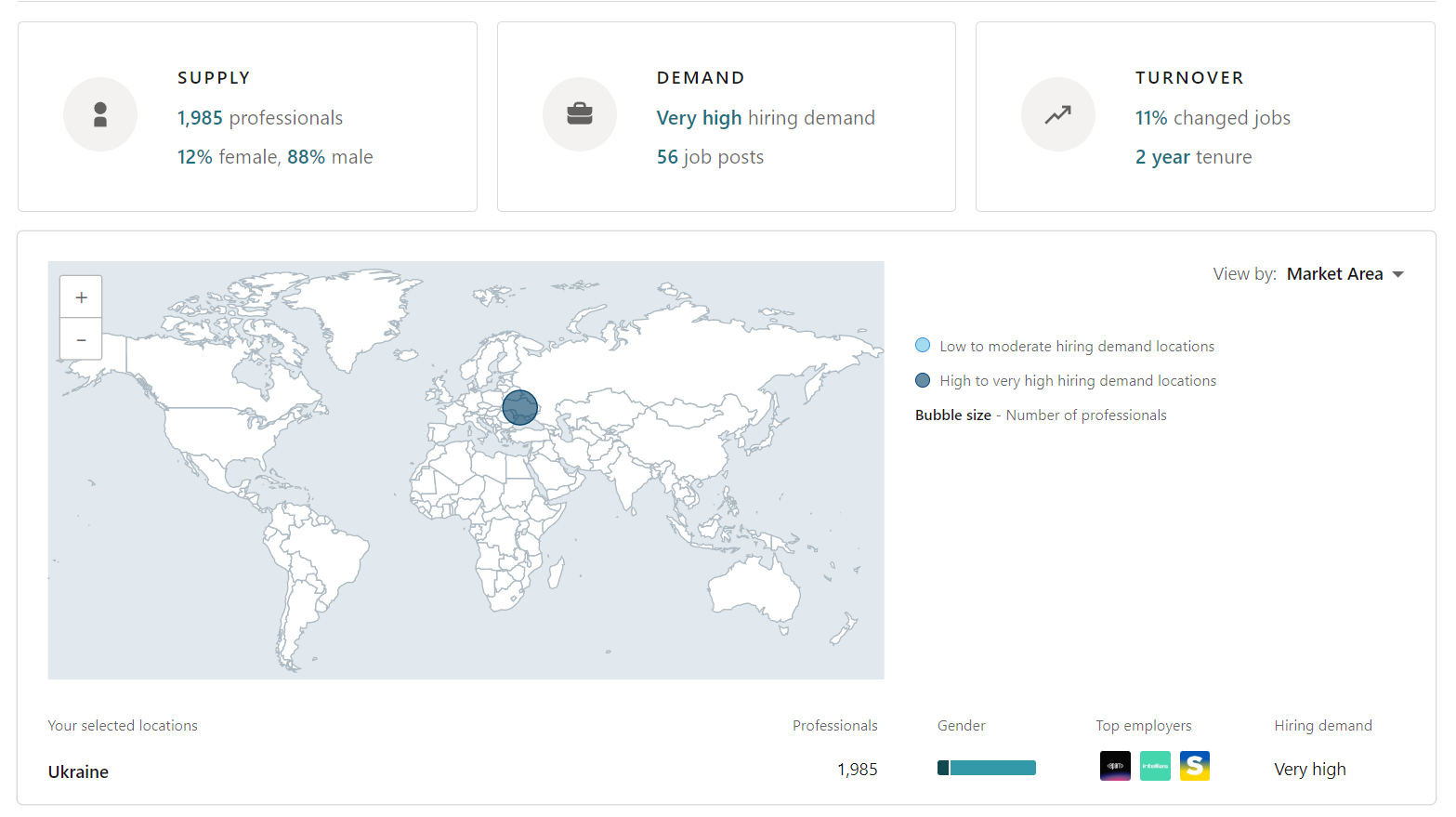
LinkedIn Talent Insights report for Java development positions in Ukraine
Unfortunately, 82% of recruiters had to deal with unrealistic expectations from a hiring manager. Data-backed proposals can help you justify the need for change and shape accurate perceptions about recruitment. Here are some tips to make your ideas data-driven:1
1. Select the data in advance that will help you make or justify decisions.
To do this, ask yourself the following questions:
Sometimes, obtaining the necessary data is not as easy as you’d like. That’s why it’s important to set up analytics tools in advance to gather crucial information.
2. Pay attention not only to the quantity but also to the quality of the process.

“Data-driven approach reflects the seniority. An experienced recruiter knows that more candidates isn’t always better. When analyzing any position, you must consider not only the number of emails sent, candidate responses, and interviews conducted, but also metrics like time, cost, source of hire, interview-to-offer ratio, and OAR (Offer Acceptance Rate). With experience, it becomes obvious that these metrics will differ from location to location, even for seemingly identical jobs. Insights based on recruitment analytics help predict outcomes, identify problems in the hiring process, and determine how to fix them.
Data is our GPS on the way to filling a position. It allows us to make decisions objectively: taking into account the recruitment funnel; bypassing bottlenecks and potential problems; understanding where to go next to present candidates. Without proper preparation, you might find yourself in unpleasant situations or take the wrong path, waste hours in traffic, or even fail to reach your destination at all.”
3. Work as a team. A recruiter cannot operate in isolation from the business. A data-driven HR manager is an essential ally in the hiring process, contributing to forecasts and well-founded decisions. A simple example: the company is aware of its employee turnover rate, team expansion plans (new locations or products), and internal mobility. Using this data, you can create an annual hiring plan. By working together, recruiters and HR professionals can accurately plan and forecast job openings, new hires, and onboarding processes. This teamwork helps the company achieve its necessary targets and milestones.
4. Compare the collected data not only with internal analytics but also with market benchmarks, such as:
📎Response Rate. According to Salesflow, candidates respond to 20% of emails on average. Short texts and personalization can increase the rate.
📎 Applicants per Opening. On average, 36 professionals apply for a Fullstack position. You can view data for other roles in the interactive section on Djinni.
📎 Cost-per-Hire. The average cost of filling a position is $4.7K, but it can reach up to 3–4 months’ salary for a specialist, according to research by SHRM.
📎 Time-to-Hire. According to Workable, it takes 27–29 days to successfully hire a candidate for IT and engineering positions. At the same time, The Josh Bersin shares insights: Tech and media companies take up to 20 days to hire, while service businesses (including IT outsourcing or outstaffing) take up to 47 days.
5. Don’t jump to conclusions. When using data, remember that it doesn’t tell the whole story. You need to dive deeper into the “why” behind the numbers. For example, if 80% of your offers come from one resource, it doesn’t mean you should abandon others. New positions might require a more specialized tech stack and may necessitate access to niche search channels.
Let’s look at practical examples of how a data-driven approach can help successfully fill a vacancy.
Case 1: The company is rapidly scaling and needs to hire 15+ high-level specialists, while the talent pool for this tech stack is limited.
Solution: Before starting the search, the recruiter informs the hiring manager about the number of candidates they can expect to interview during the first few months and within six months of the search. The recruiter understands the average conversion rate in the company’s recruitment funnel and the nuances of communicating with technical managers and, therefore, discusses the necessity of hiring while conducting 20% fewer interviews and suggests alternatives, such as hiring specialists with similar technologies and reskilling them.
As a result, the manager understands the market constraints and does not reject candidates for subjective and trivial reasons.

Case 2: Candidates are responding to the recruiter’s emails, but the job offer doesn’t interest them. The posted job openings aren’t attracting enough applications.
Solution: The recruiter sought feedback on the job description from their network within the industry. It turned out that the text was dry and formal, failing to catch the attention of professionals who are already overwhelmed with offers. As a result, the recruiter created several versions of shorter descriptions written in a friendly tone that highlighted the benefits of working for the company. After A/B testing, the best version was selected, which increased the conversion rate by 25%. Without this research, the recruiter wouldn’t have received more responses from candidates.
Case 3: One of your team’s recruiters has a significantly lower OAR (Offer Acceptance Rate) compared to others.
Solution: The analysis showed that the low OAR wasn’t related to the team or the complexity of the positions, so it was essential to delve into how the recruiter handles candidate objections. Colleagues helped review the recent offer rejections and recommended several useful resources. While reaching a 100% offer acceptance rate may require more time and practice, the recruiter’s communication with the next candidate already showed improvement. Without this analysis, the results would have remained low, and the recruiter might have been at risk of termination.
Even if your recruitment teams and hiring managers are used to making decisions based on intuition, data will be a great help. Data-driven recruitment will show you what worked in practice and what didn’t, as well as how to predict future results. Start by collecting the right information, setting up analytics, and paying attention to the numbers that show the effectiveness of your approaches. Before you know it, you’ll have built a data-driven hiring process!


