










28.01.2026
Quiet Quitting: How to Spot It Early and Take Action

At first glance, micromanagement in IT feels like common sense. Keeping tabs on every line of code and every Jira update should, in theory, guarantee smooth delivery. After all, you want to be certain that no developer is stuck, testing stays on track, and the release won’t blow up at the last moment.
However, this constant oversight slowly strangles initiative. Team members stop making independent decisions, and the very people who should be driving strategy — team leads, tech leads, product managers — get lost in the weeds of day-to-day trivia.
So, what exactly is micromanagement? Why do even seasoned leaders fall into the control trap? More importantly, how do you build a team that owns its work without constant pings and hand-holding? And if you’re the one carrying the weight of responsibility on your shoulders — how do you begin to trust others without feeling like everything will collapse?
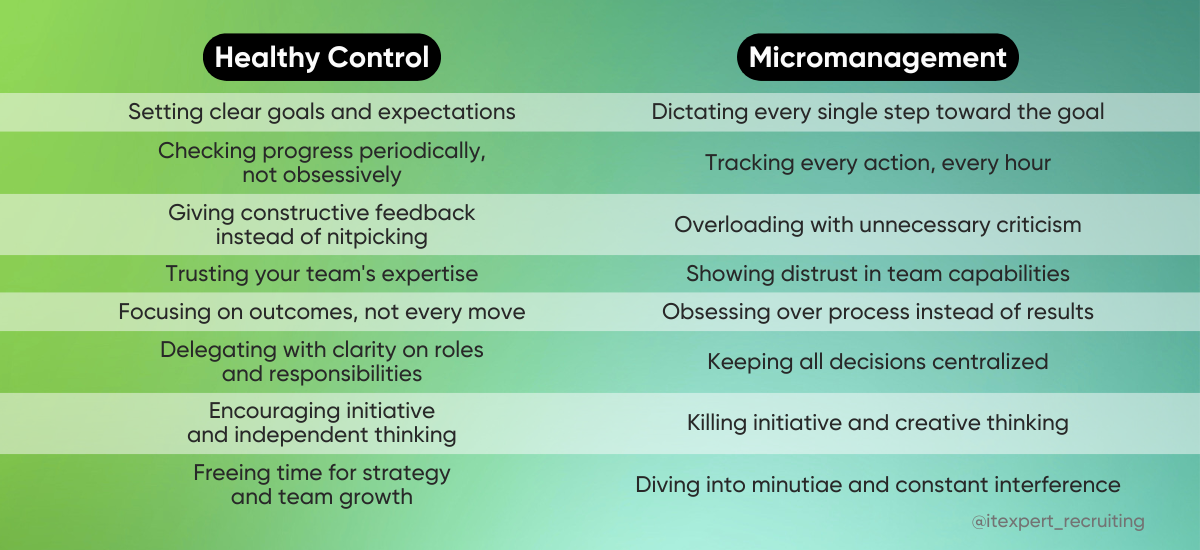
In IT, micromanagement isn’t just keeping an eye on things. It’s when a manager, instead of focusing on their true responsibilities, dives a level down and tries to control nearly every keystroke. Instead of delegating, they meddle with operational details that should have long been in the team’s hands.
This isn’t just a C-level issue. A team lead demands hourly updates: what each developer is doing, which stage they are at. Every minute gets logged — coding, refactoring, reading documentation. Developers end up spending more time reporting than coding.
Or take design: the Head of UI/UX won’t let a designer choose a button color or font without approval. Every tweak goes through an endless feedback loop, even when it’s part of the existing design system.
And it’s not control — it’s self-deception. You feel busy, but you’re not doing your actual job. You are drowning in details while ignoring the tasks that really matter.
Meanwhile, what’s a manager’s role in IT?
When leaders play the micromanagement game, everything else suffers. And that is dangerous — for the team, the product, and even investors.
This is especially critical in IT, where speed is everything: features multiply, feedback loops shrink, and timelines get tighter. A manager who can’t delegate becomes a bottleneck. Their calendar fills with stand-ups and nitpicky reviews, when it should be focused on what really matters: product vision, prioritization, and growing the next generation of leaders.
4 out of 5 employees have experienced micromanagement — and most agree it’s far from productive.
Spotting the signs early can save your team from stagnation and prevent leadership burnout. Here are the seven red flags to watch for:
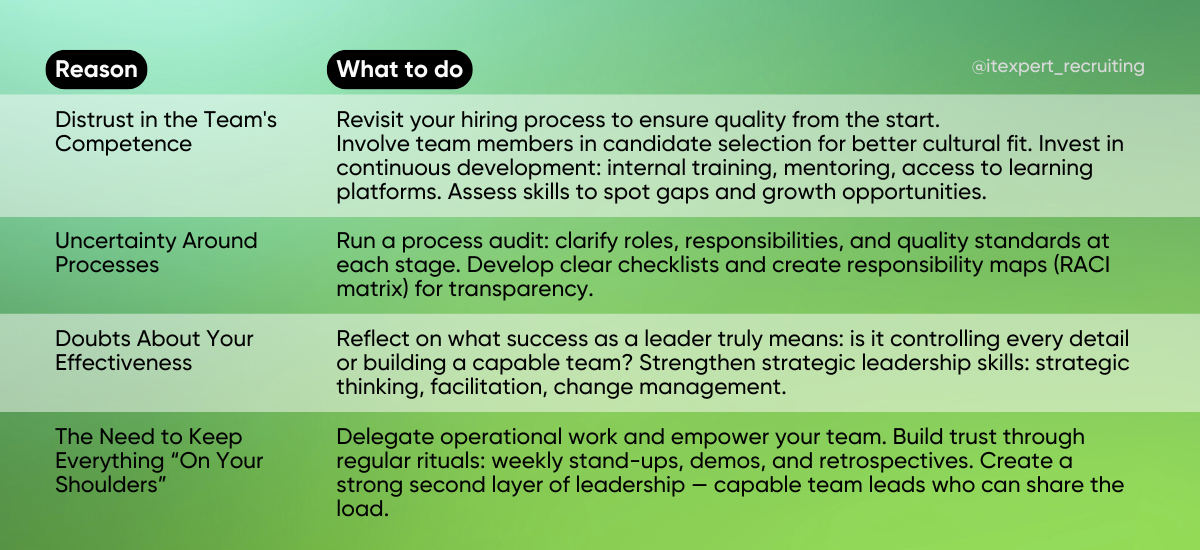
Perfectionism? Fear? Lack of experience? Let’s break down the real reasons behind the urge to control everything:
In a micromanager’s mind, one thought dominates: “I’m accountable for the result.” If something fails, they’ll take the blame. So, they check every detail, correct everything, sometimes even rewrite tasks from scratch. But behind this sense of duty hides a bigger issue — mistrust: in the team, in processes, and in their ability to delegate.
A classic scenario: the best specialist becomes a manager for their technical skills — not their leadership skills. Without training in delegation, goal-setting, or performance metrics, they default to what they know: doing things themselves. Strategic leadership turns into micromanaging every email and line of code.
Handing tasks to a junior can feel exhausting. Explaining feels time-consuming. So the manager thinks: “I’ll just do it myself.” With such an approach, work stalls, new hires learn nothing, and the manager drowns in operational chaos.
Unexpected changes — a new project, a remote format, company instability — spike anxiety. Control feels like safety. Instead of building trust and strong systems, the manager clamps down, interfering in every step to avoid failure.
Micromanagers often fear mistakes — theirs or the team’s. They don’t want to appear weak, so they smother initiative. Deep down, they fear competition and want to remain irreplaceable. But true leadership isn’t about being indispensable — it’s about developing others.
Sometimes, the issue is confidence — not in themselves, but in the team. They believe no one else can deliver the “right” result. This often comes from:
Some people simply enjoy controlling. It feels good to approve, direct, and decide. This often happens when a former specialist moves into leadership but still behaves like an expert, not a strategist or mentor.
Control can be ingrained behavior. If a person grew up with constant supervision — parents checking homework, correcting every step — they may unconsciously replicate that pattern at work. Only now, they are the ones standing over someone’s shoulder.
Managers are employees too — often squeezed between strict KPIs from above and a team that needs autonomy. When top leadership demands flawless execution at any cost, micromanagement becomes a shield. Many micromanagers were once victims of the same style, creating a cycle that passes from one generation of leaders to the next.
Preventing micromanagement is always easier than repairing the damage it causes. But if you’ve already slid into the habit of excessive control and want to change course, here is how to start.
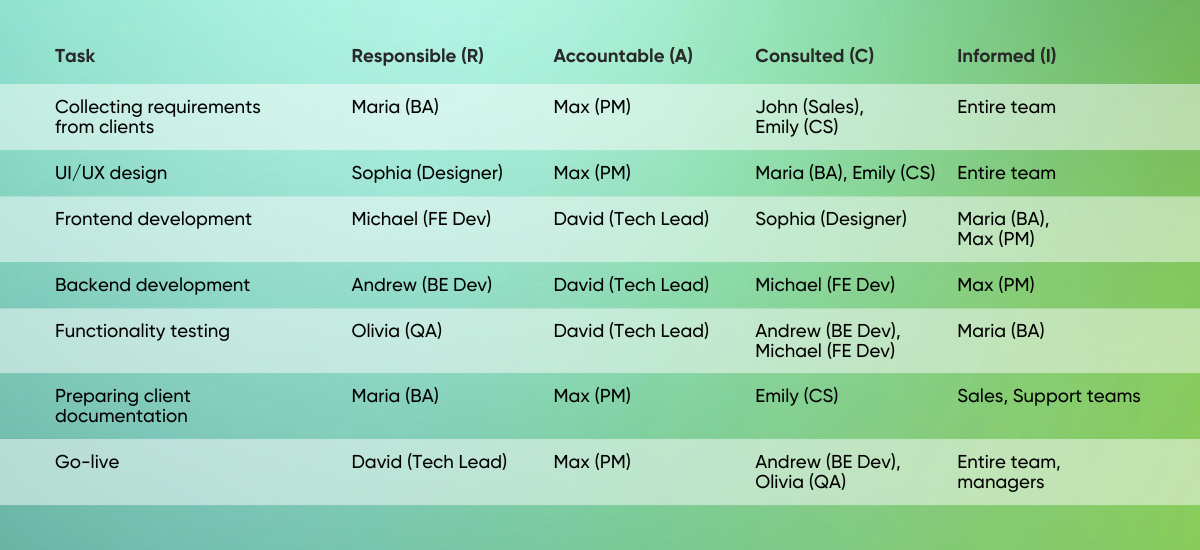
When handling complex projects with multiple stakeholders, apply a RACI matrix:
RACI is typically presented as a table: tasks across the top, roles down the side. Each cell marks the level of involvement — R, A, C, or I — showing who is responsible, accountable, consulted, or informed for every task.
Last but not least, give it time. Changing your leadership style isn’t a quick switch — it’s a mindset shift. Research shows that meaningful behavioral change becomes noticeable around six months after consistent practice. By then, both leaders and their teams report fewer control issues and greater effectiveness.


