






10.06.2026
Cybersecurity Recruitment Strategies When Talent Is Worth Its Weight in Gold

How Much Does Hiring a Developer Cost? An experienced recruiter knows the answer and has a plan in case the answer is “too much.”
Here, we’ll look at effective practices for reducing hiring costs with insights from:


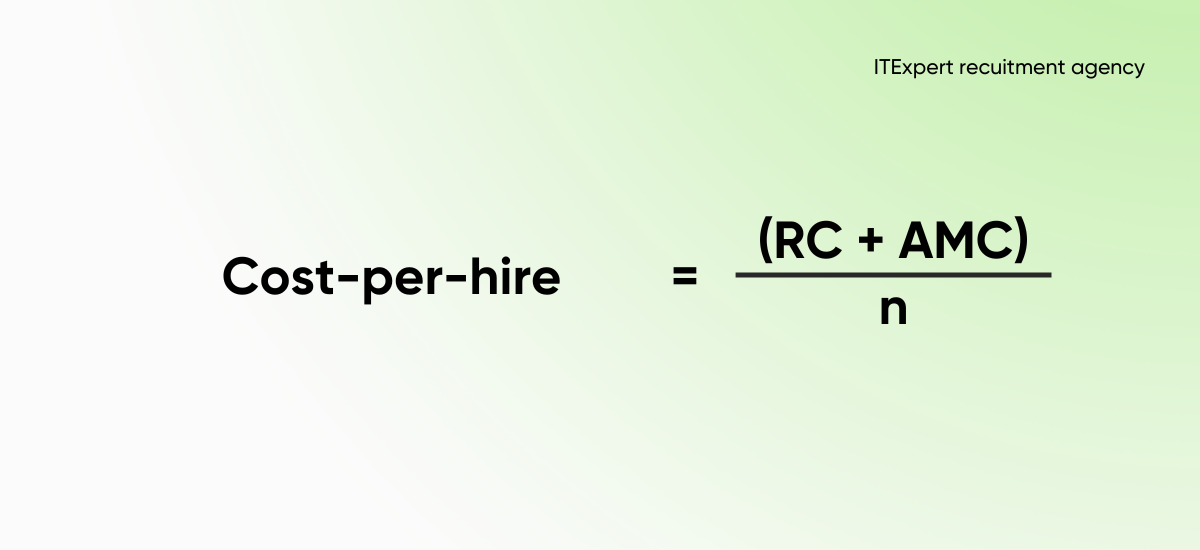
Cost-per-hire (CPH) helps evaluate the return on investment and effectiveness of the hiring process. By analyzing this figure monthly, quarterly, and annually, companies can determine if adjustments in recruitment strategies are needed.
In addition, CPH helps to:
The basic cost-per-hire formula:
Components Included in the Formula:
Recruitment costs include:
Responds from marketing channels (AMC) can reinforce the results. These costs include salaries of marketing team members involved in hiring (e.g., an Employer Branding Manager) and payments for job boards, vacancy ads, etc.
Through the basic CPH formula, you can manage hiring cost-effectiveness by adjusting recruitment expenses and increasing the number of successfully filled vacancies.
You can also use more complex formulas to calculate cost-per-hire, including electricity and equipment costs for the recruiting team or the costs associated with recruiters’ sick leave and vacation, social benefits, and more. Let’s consider some advanced factors influencing hiring costs.
This is particularly significant, as large sums can be “lost” here — up to thousands of dollars. What should be considered? The quicker the vacancy is filled, the lower the hiring cost. The figures rise significantly if a position remains open for around two months with 20 candidates interviewed. Add three stages of one-hour interviews with three team members, and you could spend up to 120 hours on interviews alone, potentially costing up to $2.5K at an average IT professional’s hourly rate — just for candidate interactions. Simply removing one person from the hiring process could save up to 40 person-hours.
Hiring the first candidate interviewed is often unrealistic (though it does happen). Companies usually interview 5–8 candidates to choose the best fit and give a job offer. In contrast, failing to hire within a month means rising costs daily — the figures are sky-high. Summing up all expenses, putting a vacancy on hold may be cheaper than continuing a prolonged hiring process.
Another important factor for calculating CPH is the complexity of the vacancy and the specialist’s salary. Due to search difficulties and external resource and partner fees, hiring a Junior salesperson is cheaper and faster than hiring a senior DevOps engineer.
“CPH depends on various factors. If an external recruitment agency is involved to fill a C-level position, services alone could cost around 20% of the candidate’s annual salary. For a company hiring 2-3 Junior-Middle level employees a month, paying only the recruiter’s salary and some resources, these figures would seem shocking.”
Additionally, prolonged recruitment can lead to lost profit during this period. For example:
Delays in hiring are difficult to account for in CPH calculations but are red flags for the business in practice.
In IT, cost-per-hire can climb to 25–30% of a specialist’s annual salary. For instance, with a median developer salary of $3.3K, hiring costs would reach about $12K.
💡 Interesting Fact: Hiring costs vary across regions. According to Inna Izmailova, cost-per-hire in India and Colombia is close to that in Ukraine, slightly higher in Europe, and the highest in the UK and the U.S. Thus, the average hiring costs in the United States run around $4.7 thousand.
The key rule: faster = cheaper. The lowest cost-per-hire occurs when a position is filled with the first candidate on day one of the search. Sounds like a dream? Here are some recruiting tricks to help make it happen.
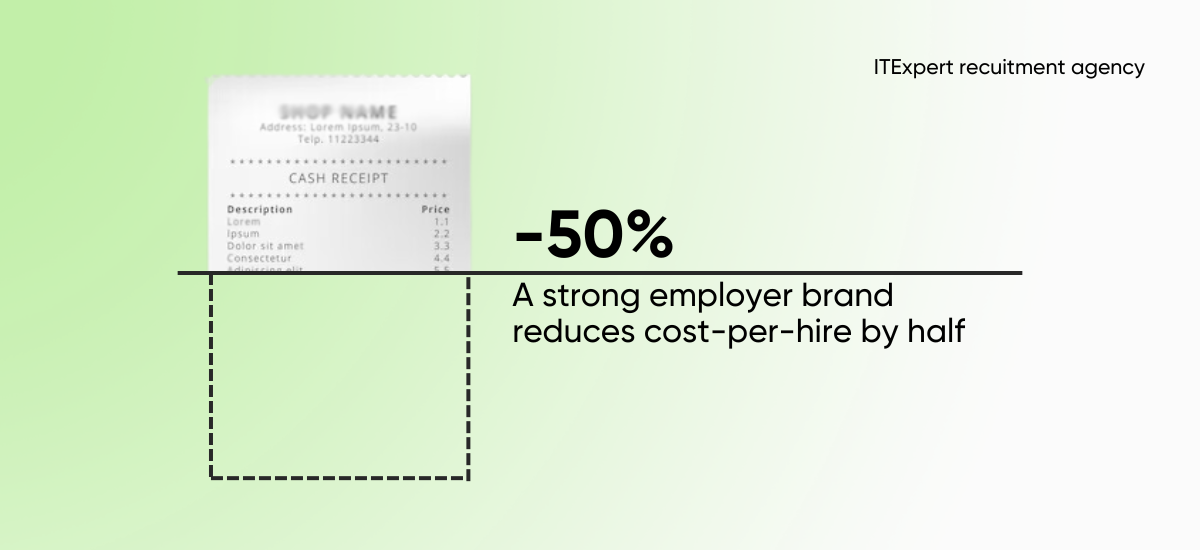
The better known and reputable a company is, the more people want to work there. According to LinkedIn research, developing an employer brand can cut hiring costs by up to 50%. Remember, it’s not enough to have solid processes and a cutting-edge tech stack — you also need to tell your story to the community.
“We see this with tech giants like Google, Meta, and Amazon. The employer’s brand is the largest source of hiring candidates for them. It attracts a huge number of relevant applicants.”
To avoid a years-long search for a “unicorn,” identify exactly who your project needs — a standard developer or a top-3 market specialist. Hiring the first option is faster and less costly. However, although businesses pay more when hiring a rare specialist, this amount can be justified when the company is in critical need of one. The main thing is to determine right away that you need him or her, and not to change the requirements for a vacancy once a month, saying, “Let’s look for more; these candidates are not the right ones.”
“Launching vacancy announcements without an accurate candidate profile means you spend time and money refining it. With each interview, you get hard knocks clarifying the profile, often realizing which skills should have been included. Frequent updates to requirements shrink your candidate pool, forcing you to restart the search.
This strategy not only drives up costs but can result in recruiter burnout or a negative impression of the employer brand by candidates. This can lead to new hurdles that will cost your company dearly.”
Referral programs leverage current employees, former colleagues, and the broader community to attract candidates, offering financial or non-financial incentives for successful hires. Research shows this method helps to attract deficient talents or fill specific positions with a shortage of candidates 47% faster — and therefore cheaper.
More responses don’t mean easier hiring. The more interested candidates respond to vacancies, the more resources recruiters and the team must devote to properly filtering them.
Setting realistic vacancy requirements can streamline recruiting, allowing one recruiter to handle multiple positions rather than sifting through 30+ responses to a Junior vacancy.
But sometimes, it also plays a cruel joke when candidates must be hunted for a long time. Let’s say you want to find someone to drive the product and not just hire a developer. So now you want to focus on specialists with higher technical education, who were employed by respected companies. With this approach, job boards won’t collect the necessary feedback, and recruiters must actively search on different platforms. As a result, the recruiting department’s workload increases while that of the development team decreases (less time spent reviewing resumes, conducting interviews, and writing feedback).
Load balancing is the perfect solution.
“The recruiter should act as the conductor — manage the hiring manager’s expectations and gauge the vacancy level/number of candidates, understanding the market capacity” — Stas Shihov.
This approach can be used if you have positions that will open at 90% or more probability or can hire for a reserve (bench). Predictive hiring brings the candidate’s start date closer, allowing you to launch HR screening as early as possible. However, this method is relevant only for some local markets.
“Predictive hiring works well in locations with extended notice periods based on local legislation. For example, in Poland, hiring under an employment contract (Umowa o pracę) requires a three-month service period with the current employer, which adds significant time to the time-to-hire, including the recruitment process.”
Maintaining a continuous hiring process with swift interviews and feedback cycles to avoid idle costs. Hiring managers and recruiters should align on the number of candidates they can process in a set time.
Sure, if a manager makes three interviews a week, it doesn’t mean that the recruitment department will always come up with exactly three candidates. However, the recruiting task is to get closer to this number. Instead, the hiring manager should not delay feedback so as not to delay the hiring process.
“Imagine high standards for a role and a well-prepared recruitment team supplying quality candidates for consideration. Such specialists do not wait for your feedback for too long — they can choose where to work. If candidates ‘take off’ at the last stages of hiring, it hurts the entire process. It’s painful to lose candidates at the final stage, especially if a manager goes on holiday without finalizing decisions, only to return and find those candidates hired elsewhere. In this case, both time and budget are wasted.”
In conclusion, if you want to reduce cost-per-hire, always set a deadline for closing a vacancy. This way, you can focus on coordinating your plans, assessing market capacity, the number of candidates, and your resources. Remember, a role left open for several months means a cost-per-hire that’s “shooting for the stars.”


