






17.12.2025
Why a Recruiting Team Needs a CTO

One candidate accepts an offer in a minute, while another takes 30 days to decide, eventually saying “no.” Someone else doesn’t agree right away — but still confidently shows up for work.
Is there any logic in this? Yes, and we found it in numbers.
We analyzed 300+ offers and gathered:
Here’s how to cut down on unexpected rejections — even after you’ve heard “yes.”
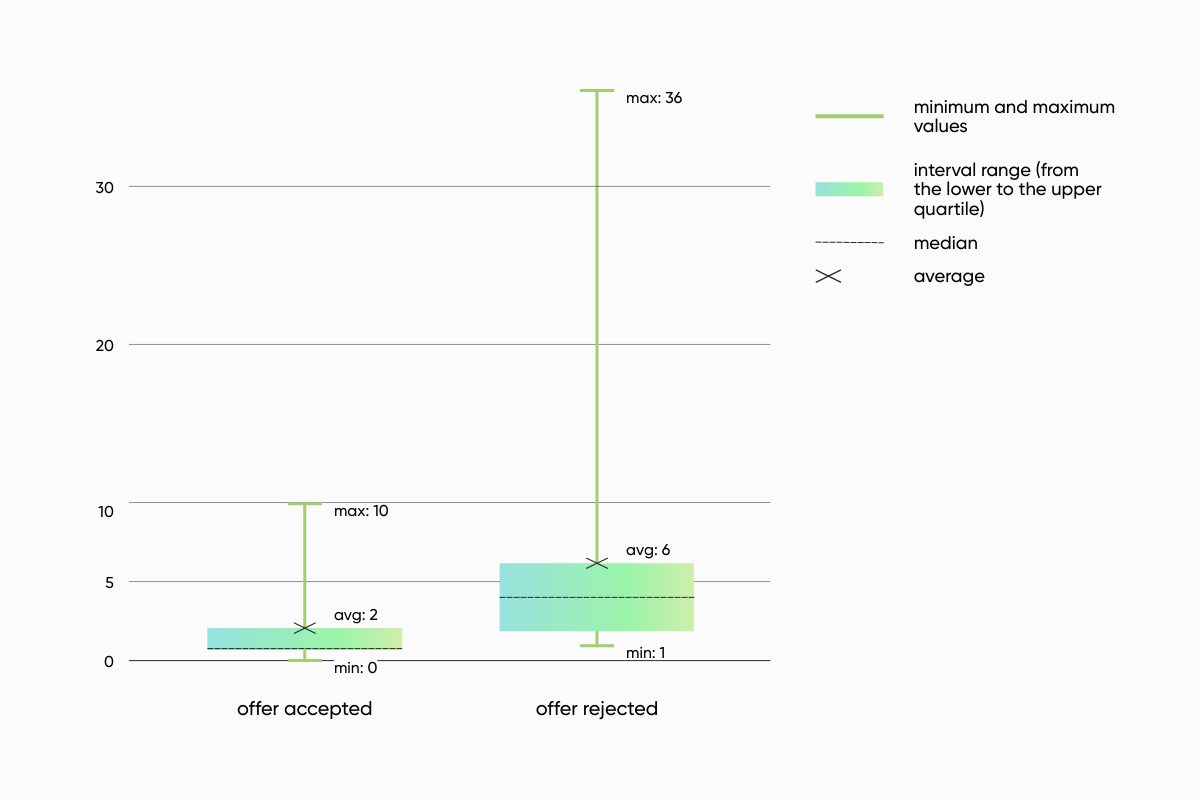
In our experience, the fastest acceptance happened right during the interview. The slowest — after 36 business days. Of course, the typical case lies between these extremes.
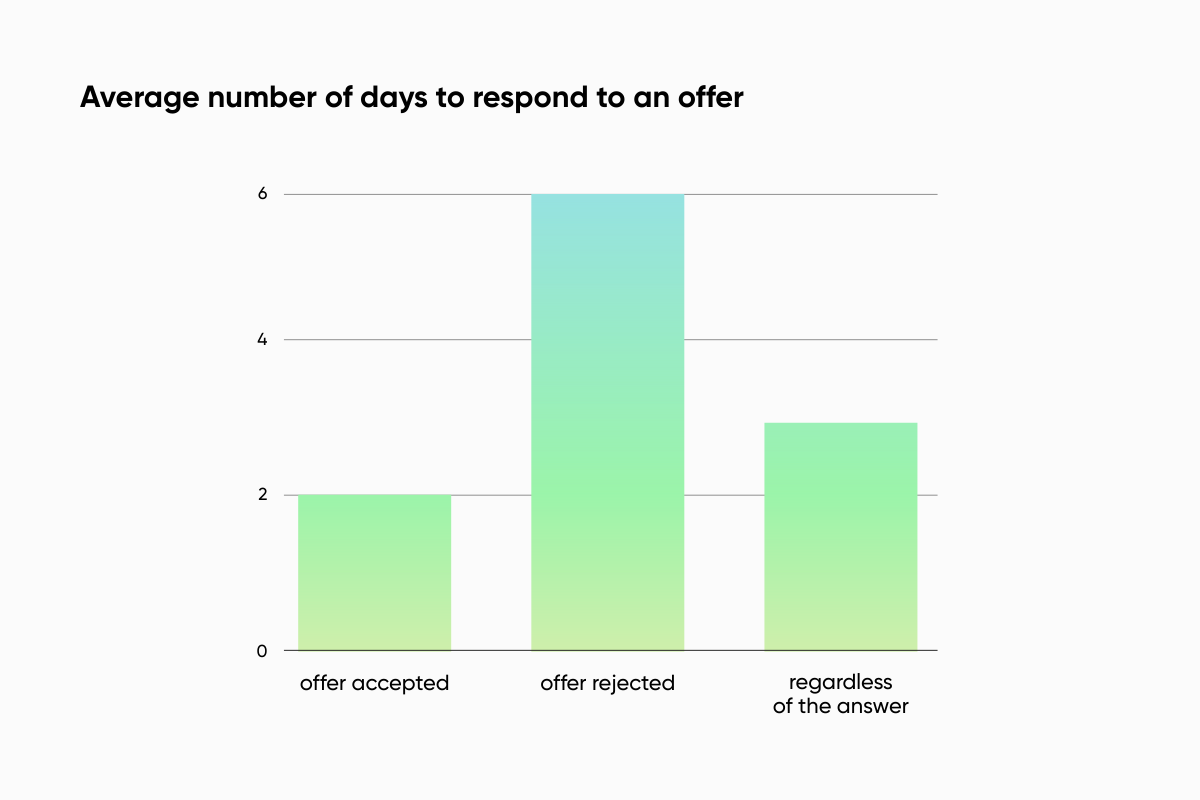
According to the study, positive responses are faster. The median is two days, and the average is only one day of reflection. The longest is 10 days, including time for negotiations.
Candidates who refuse, however, take longer to respond. In this case, the median is six days, and the average is four days.
Time is really playing against you. A clear pattern emerges: the longer a person thinks over an offer, the less likely they are to accept it. The correlation between decision time and the response to an offer is -0.4, meaning a moderate inverse relation.
The reasons include:
It happens less often, however, when candidates take a break to consult with their spouses. And one specialist delayed their decision because they were on a fishing trip without a connection 🙃
Of course, if a candidate takes too long to respond, it’s a signal to look closely at the situation. Ideally, discuss decision timelines, motivation, and circumstances in advance to avoid unexpected refusals or ghosting. But don’t take it too seriously — leave some room for a considered decision.
A quick “yes” doesn’t guarantee the vacancy is truly filled. 4% of candidates change their minds after initially accepting.
On average, such specialists gave their first answer in five days, and then reconsidered their decision in another 10-15 days. In our sample, there are cases where the final “no” came 20-30 days after the approval.

“We had an architect accept the offer, confirm the start date… and three days before joining, he asked for a pause. The reason was a severe depressive episode. He frankly admitted that he was not sure he would be able to work in the new environment because he had just started medication. Some might say, ‘A real senior or manager should power through.’ But we know mental health isn’t about willpower. In this case, refusal was a responsible and mature choice. It’s better to say ‘no’ than burn out when the team is counting on you most.
Another case — we spent months headhunting a candidate for a non-tech company. At first, he declined, then agreed after a series of negotiations. Two months later, he was let go for low performance — likely because he was juggling other projects. They needed an autonomous IT professional, but autonomy requires motivation and focus. Next time, the company will think twice before making a similar offer.
Offer acceptance isn’t the end of the recruiter’s job. The real finish line is when the candidate not only starts but stays, adapts, and delivers results. Hiring isn’t a one-time event — it’s a consistent process”.
Based on the hands-on experience of ITExpert recruiters and an in-depth analysis of cases where offers either fell through or were successfully secured.
Before sending the offer:
After sending the offer:
After accepting the offer:
About the Study. We analyzed responses to 315 job offers from mid- to senior-level IT professionals. 79% were accepted. The sample included C++, Python, Java, Golang, .NET, and other developers, QA, DevOps Engineer, digital marketers, and other specialists. Only business days were counted.


