




18.08.2026
How Loyal Are Your Employees: Using eNPS Surveys to Calculate Employee Loyalty

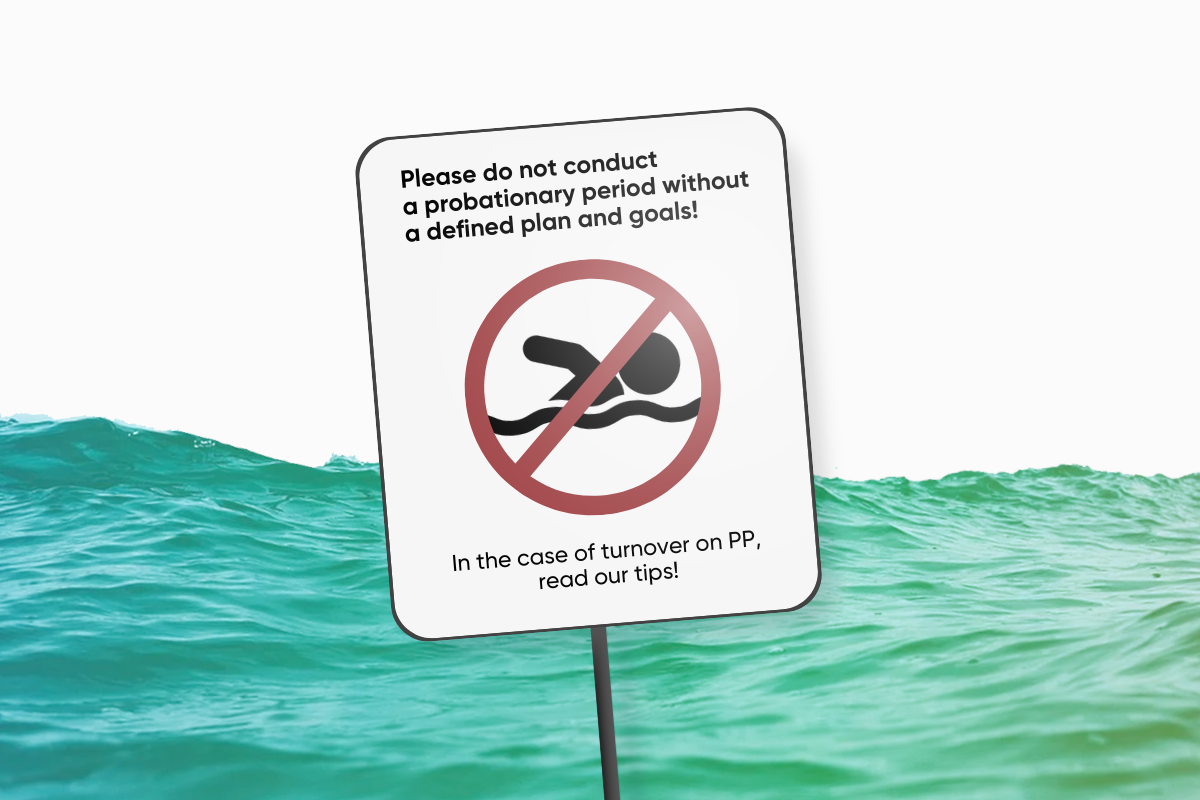
Sometimes, finding candidates isn’t the issue. They sail through the recruitment process and reach the probationary period. However, after some time, they either get let go or leave on their own, leaving the recruiter/HR manager to start the search all over again. In fact, according to the research conducted by Worksome, a third of new employees aren’t passing their six-month probation period. That costs companies thousands.
Here’s the deal: either the candidate discovers something the employer cleverly kept under wraps during interviews and job postings, or the selection process and probationary period weren’t fine-tuned enough.
Mariia Kutsevol, Recruitment Team Lead & Account Manager at ITExpert, has been the guiding light for dozens of IT professionals finding their dream teams and is currently onboarding tech recruiters into the internal team. Together, we’ve uncovered what a probationary period is, common mistakes companies make during the probationary stage, how to swiftly spot when things are amiss, ways to establish a smooth process, and strategies for newcomers to ace their probationary period within the team.
Let’s discuss:
A probationary period may take place in such cases:
How long should the minimum new hires’ probationary period be? According to the Human Capital Institute, most companies stop onboarding new hires after the first week. As a result, people are confused and frustrated, lacking knowledge, or other resources. The most common term, which is also the most effective, is a 90-day probationary period. Less often, it can be finished earlier due to the high performance of a new team member, e.g. in 1–2 months.
During this period, the newcomer is expected to adapt, grasp the team’s processes, and demonstrate their worth. The length of this phase varies based on factors like process complexity, role, access to training/mentoring, and the individual characteristics of the specialist. Sometimes, the probationary period can stretch from 2 to 4–6 months. For someone who hasn’t changed jobs in over five years, even with a decade of experience, adaptation might take 4–5 months.
Some companies seriously approach onboarding and tasks during the probationary period. A newcomer is assigned a buddy who helps to get up to speed. They build a well-thought-out program of immersion in internal processes, introduce colleagues, and regularly hold one-on-one meetings with the manager and HR, or a specialist to track how a new employee feels in the team, what problems there are and what needs help, and so on.
Sad but true: more often, the onboarding system exists on paper but needs to be put into practice. Beginners find themselves drowning in a heap of tasks, expected to perform at a high level while navigating numerous organizational nuances. Moreover, the IT field is ever-changing — onboarding plans and probationary programs may be outlined but forgotten in the whirlwind of activity, leaving newcomers adrift.
In such a scenario, even a seasoned IT professional might struggle, primarily because clear tasks were never set, and there wasn’t ample time to understand how things work around here.
How to successfully pass the probationary period? Both parties should be interested in the successful completion of the PP: both new specialists and the company that hires them. Therefore, the reasons for unsuccessful completion can be conditionally divided into two “columns”: which depend on the newcomer and the company.
| Issues from the perspective of employers | Issues from the perspective of newcomers |
|
|
Pay attention! During the probationary period, professionals are legally shielded from discrimination based on age, gender, race, ethnicity, religious beliefs, and other characteristics. Additionally, probationary employees have the legal entitlement to receive paid sick leave and wages that meet or exceed the statutory minimum.
Let’s look at some common reasons why candidates don’t pass the probationary period.
Some of the hard and soft skills of the newcomer in combination with how they affect the performance of actual tasks can become an obstacle to successfully passing the probationary period. Among them are:

“Constant criticism of everything in the company, without suggestions of what and how to improve, can also affect the decision to continue further cooperation.
For instance, it’s not just about pointing out that ‘there are too many work meetings in the company/project.’ It’s also about recommending which meetings could be removed from employees’ calendars. Some meetings might not be a priority for certain employees, eating into precious time needed for their main tasks.
Or, if the new team member feels that the meetings drag on and it is impossible to discuss important issues in them, it is worth offering one or more effective options for facilitating meetings and testing which one will work best for this team.”
Thinking that if you don’t have constructive feedback, then everything is fine is a kind of trap that new team members often fall into. It’s crucial to bear in mind that leaders/managers usually have busy schedules and may not have time for detailed feedback. Someone may not want to provide a negative assessment and even with personal overtime redo the work for new employees. The result, most likely, will be dismissal during the probationary period and a damaged relationship.
Therefore, if there is a gap in feedback at the new workplace, you need to ask the manager about it at least once every two weeks and discuss it together. If the manager is overworked, but there are more experienced specialists in your team, agree on feedback from colleagues, having previously approved it with your manager.
The worst nightmare of a manager in IT is an ultra-low performance or a combination of several full-time jobs among employees. People are looking for partners to rely on. Low involvement directly affects the success of the probation period in IT.
“Reasons like watching TV series, extended social media browsing during work hours, or juggling multiple full-time jobs without informing the employer still exist. There have been instances where specialists attempted to juggle three full-time roles, listening to two daily meetings simultaneously through two sets of headphones.”
Once you’ve developed a probationary hiring plan, you must implement it effectively. Several steps will make the beginning of cooperation with new specialists comfortable for both parties.
By laying out clear expectations for the employee during the probationary period, you’ll sidestep any confusion and ramp up productivity in your collaboration. Craft a detailed checklist that you and the employee can always check back on. It’s key that the new employee knows their tasks, responsibilities, and what’s expected of them right from day one at the company.
In the United States and Great Britain, about $37 billion is spent annually on maintaining unproductive employees who don’t understand their goals and objectives. In addition, 60% of companies do not clarify goals for their new employees.
Work with the newcomer to craft a tailored action plan: jot down goals for the probationary period, draft a development roadmap, and set up checkpoints to track progress. Make sure to document all discussions and agreements reached during this process.
Use the GROW coaching model for effective goal setting:
It is also effective to use the SMART method to formulate short-term plans. According to it, goals should be Specific, Measurable, Achievable, Relevant (correspond to your global goal), and Time-bound.
What a probationary goal in IT might look like:
✅ Implement Scrum meetings into the team routine in two months.
✅ Implement priority To Do by August 15.
✅ Provide at least three ideas for improving the onboarding process in the company before the end of the probationary period.
The SMART goal should match the specialists’ abilities: their experience, knowledge, the job market, and industry trends. It should be challenging enough to inspire growth. Easy goals won’t motivate or push for development. Yet, they should also be realistic; unattainable goals can be demoralizing for specialists.
Describe the adaptation program, taking into account all the important stages, the persons involved, and access to the necessary documentation. Here’s what it might look like:
Owing to the roadmap, you will not get lost and will keep everything in mind during the probationary period.
72% of employees claim that one-on-one conversations with a manager are the most important part of onboarding. During such meetings, you can determine if the newcomer’s expectations align with reality, identify any work blockers, and assess whether the specialist has adequate resources to complete tasks, among other things.
The newcomer’s probationary period is coming to an end. How to plan the next steps? Where to start?
The probationary period gives you time to assess your abilities and an opportunity to ask helpful questions. At its conclusion, you can determine:
Meetings at the end of the probationary period are a lot like regular one-on-one catch-ups. How well they go boils down to the questions you throw out and how you use the feedback you get. The candidate’s responses are golden chances to level up company processes, whether or not you’re thinking of keeping them on board.
Poor performance or a mismatch in values/expectations during a trial is a common scenario in IT. However, no matter what your experience of working with an IT specialist was, it is important to part ways and stay on friendly terms. A professional may return to the job market and start posting angry posts on social networks, as well as telling friends about their not-so-pleasant experience during a probationary period at your company or too abrupt a break in cooperation.
It’s crucial not to threaten a candidate with getting the boot if they don’t pass the probationary period or abruptly cut ties with an IT specialist without explanation. Such harsh actions can be counterproductive and damage your HR brand. Instead, it’s vital to communicate with the newcomer about areas of improvement. If the company culture permits it, extending the probationary period can be the best course of action. Further advice on handling employee termination in the IT field was detailed in our blog.
Mistakes and hiccups are part of the deal: websites crash, products glitch. Hey, even the best of us mess up sometimes (yes, that includes you). How leaders handle these slip-ups can seriously impact the company’s image.
Pointing fingers and giving people the boot only breeds distrust, fuels unproductive vibes, and keeps the business stuck in neutral. At the same time, when we respond without laying blame, it sets the stage for a safe space where learning and growth can flourish. This vibe encourages trying new things, thinking outside the box, and sparking innovation — all key ingredients for a thriving business. Consider mistakes as fresh chances to grow and learn!


