




20.05.2026
Most Candidates Never Ask This: 8 Questions to Ask At An Interview

Productivity and personal effectiveness are some of the latest career trends. Everyone wants to be the best, to reach the highest results, and to make the most of every opportunity. There are tons of hacks and tips on how to become more effective and efficient. Still, are all of them true? No way!
Let’s consider the most widespread misconceptions about productivity and personal effectiveness and find out what works and what can be omitted. All in all, these myths you believe in harm productivity and keep you from achieving ambitious goals. 😉
This is a weird stereotype that the more one does, the more productive they are. Forget about this myth!
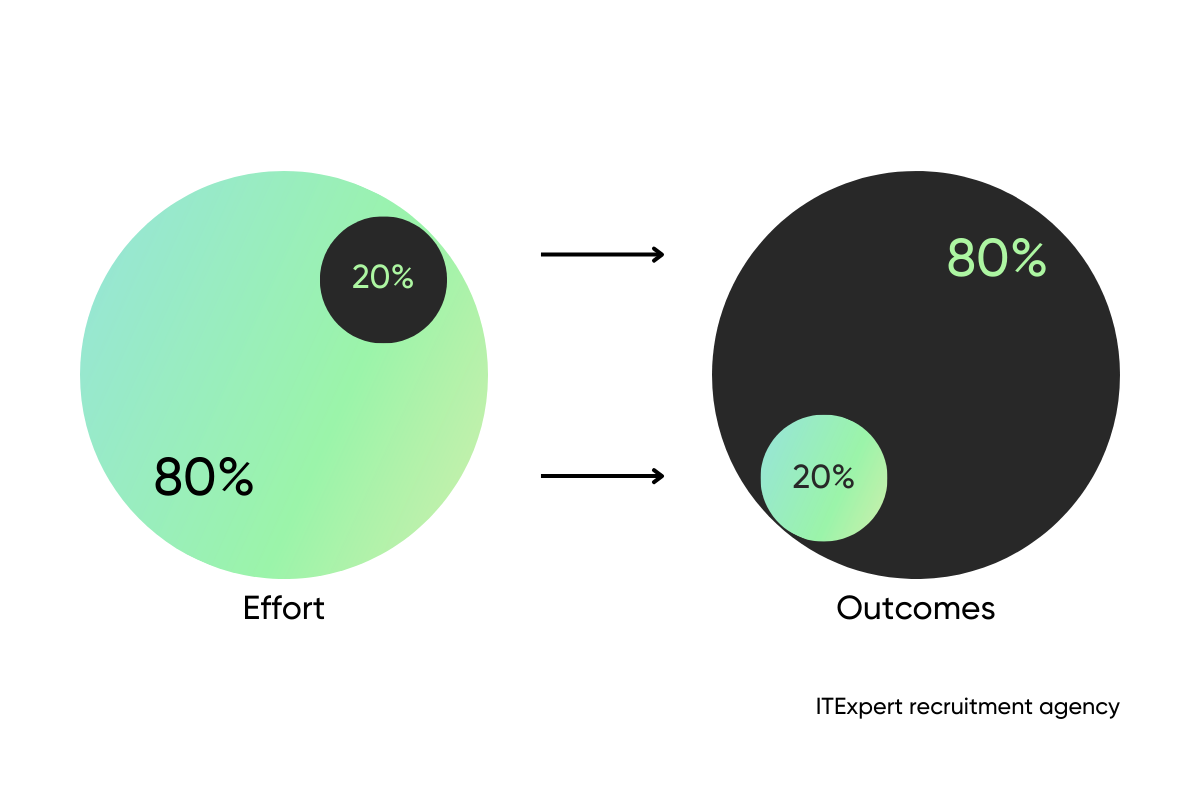
The truth is that you should focus on quality, not quantity. You might have heard about the 80/20 rule. It states that 20% of what you do drives 80% of results. On the contrary, 80% of your activities result only in 20% positive outcomes. So, do you need to work more to become more professional?
Also, if you grab a handful of work that will fill your life only with business tasks, the quality of your personal life will decrease. Consequently, due to constant overwork, you can face a quick burnout and suffer from the feeling of unhappiness.
What to do:
Allow yourself to do less. However, keep in mind that these activities should bring you closer to your goals. Analyze any task before handling it, find your most efficient 20%. This will help you be satisfied with your success at work and combine your business and personal lives.
Some people believe that stresses act like extra drivers and empower people to become smarter, stronger, and more productive. Is such thriving under the pressure of deadlines effective? In some rare cases it is, but… Experiencing constant pressure will lead you only to emotional burnout.
What’s more, tackling important tasks right before their deadlines means quite a mess in your head and the outcomes. Sooner or later, colleagues and partners will see serious drawbacks in the working process and business achievements. This will force them to stop cooperating with you.
Also, the pressure at work negatively affects employees’ health, so it’s not the best idea to boost your productivity in this way.
What to do:
Keep away from continuous stresses at work. Try to get ready for tough challenges in advance. Plan your endeavors and start working on them before the moment X comes.
For example, if you’re launching a product on a new market, make sure you know everything about this market to draw up the correct positioning for the product. Make announcements on the future launch and gather a community of interested people around it. This is not something that can be done overnight.
There are cases when people are waiting for ages for inspiration and do nothing. What is wrong with this, you might wonder. Inspiration is always helpful, it fills you with plenty of intrinsic motivation and boosts productivity.
Nevertheless, you can waste time waiting while there is a large list of things to get done. This is a systematic process that can’t be delayed. Business and art are somehow interconnected, still, the first one doesn’t require a certain muse – it needs active actions and results.
What to do:
Don’t wait, do what you have to do. Just like appetite comes with eating, your inspiration will surely overtake you. But if you wait for the muse until the moment when the boss demands a report on the work done, then you will have to look for a new job. And that certainly won’t help your productivity!
Almost everyone who writes blogs on personal effectiveness considers mind hacks as a top-priority perk. Though these key phrases and motivators can inspire you to try new ways of problem-solving, they won’t do the whole job for you.
It’s like learning a language. If you learn a dozen new words and phrases, you won’t be able to speak it with native speakers.
What to do:
Sure, you can use mind hacks and tips from the web, just don’t treat them as absolute truth. This means that you shouldn’t spend all your free time on testing all those hacks. Learn from your own experience or find a mentor at work. Practice proven by your colleagues will work better.
We don’t say that webinars and training sessions are ineffective. On the contrary, they help you grow personally and professionally, attain new skills, and increase your expertise. However, a two-day seminar won’t turn your life upside down and drive your promotion from a programmer to a CTO.
The issue is not in learning programs but the human brain. It needs more than a couple of days to digest the information and turn it into its own experience.
What to do:
Be ready to attend such training sessions on an ongoing basis. Prepare to try everything you hear personally. Only experience and practice make specialists productive and skillful.
Nothing can be more effective than creating a to-do list for a day or week when it comes to planning. Anyway, we can’t fully rely on them. Without a thorough analysis of your everyday results and coming up with ideas for improvement, lists won’t contribute to your productivity.
What to do:
Use the 80/20 rule we outlined in the very first tip. Complement your to-do list with a not-to-do list and specify everything that decreases productivity. For example, you can save time for important tasks and order food delivery instead of cooking yourself.
Also, every evening, think about what was done well and what can be improved. Include these comments to your next-day to-do list and learn from your mistakes. Write down any new shortcuts found to make yourself more effective tomorrow.
Relying on technology (as relying on to-do lists) may be useful when you know what you do. These are only tools that are helpful only in the right hands. Otherwise, you will only create visibility of vigorous activity, which does not work.
What to do:
Do not expect services to do tasks for you. Sure, you don’t need to waste tons on time, for example, on sending 20 similar emails by hand when you have a proven email marketing service. So, use tech tools for making the working process smoother and more convenient.
Get rid of products and services you don’t use – we bet you have a couple of them in your arsenal. Regularly clean the list of your tools, as legions of unnecessary services will only bring more chaos by sending you all those marketing emails and requiring you to perform some action on the website from time to time.
Many blogs on personal effectiveness suggest cleaning your desktop and having nothing there. As for us, we don’t consider a clean table as an indicator of efficiency and even more so, a prerequisite for increasing productivity. Still, does this mean you can have a mess at the workplace and be able to stay focused?
What to do:
Before throwing away your stickers, notebooks, pens and pencils, think of what you really need to have at hand. “Organized” should mean “efficient” and “ergonomic”. Place these things at a convenient distance to constantly have access to them. So, you don’t need to keep your workplace ideally clean!
If we compare two employees, let’s say, one who sits down at the desk from 9 to 5 and another one who takes a break for having a cup of coffee, going for a walk or just briefly chatting with colleagues, who will be more productive? Surprisingly, the second employee will make it! Why is it so?
Your brain has to recharge from the constant load and activity. If it doesn’t have such an opportunity, it will save energy by decreasing reaction and attention. Short breaks let us take a rest from working challenges, after which we can take on the tasks with renewed vigor.
What to do:
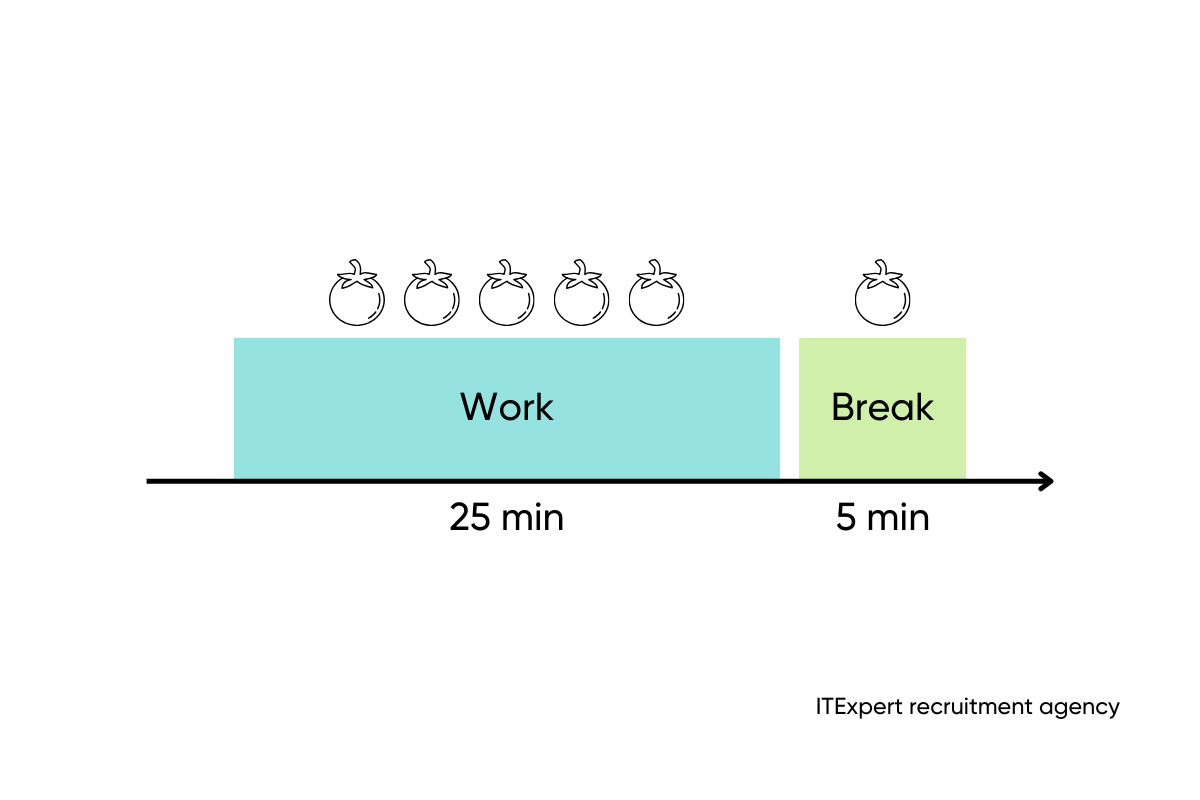
Just take more breaks! That’s all! You’ll see the difference and a strong productivity boost on the very first day. If you forget about making pauses, use the Pomodoro technique. Set a timer, work until it rings and take a short break (3-5 minutes). After several “pomodoros”, rest for a half an hour and continue working productively! 😉
This misconception is very common. In some cases, multitasking is harmful, especially when one chaotically switches between several tasks, and this results in none of them finished. Nevertheless, if you find the right approach to multitasking, it can contribute to your success!
What to do:
Changing activities during the workday can positively affect your motivation, inspiration, as well as results. Routine requires deep focus, which can be exhausting. Multitasking allows you to vary types of work and keep yourself active throughout the day. Keep in mind that it’s not about task switching!
Finally, this is not the whole list of misconceptions, as we took into account only the most widespread of them. We hope that revealing these myths will help you become more productive and efficient!
So, what myth has impressed you or what would you add to the list? Feel free to share your thoughts and ideas in the comments!


