




16.09.2026
Employee Satisfaction: How to Tell If Your Team Is Truly Satisfied

Hunting is when employees are lured away to a new company with more attractive conditions. It may seem simple to prevent — just give people what they need. But how do you know what those needs are in time? And what if your business can’t fully match their expectations?
Together with Maria Kutsevol, Team Lead & Account Manager at ITExpert, and Ann Paraskeeva, Technical Recruiter at ITExpert, we explore why teammates become interested in competitors’ offers — and what really works against employee poaching: the carrot or the stick?
According to Zippia, 73% of potential candidates on the market are ready to consider new offers passively while having a main job. They may include your team members. This is what can attract them to competitors:
When it comes to attractive offers, salary is the first thing that comes to mind. Indeed, the HRMorning report shows that financial compensation is the most important factor when considering a job switch. However, it’s not the only one. In fact, the more experienced the specialist, the more they prioritize the project and challenges — and the less they focus solely on pay.
The Execu|Search Group reports that 86% of professionals would switch jobs for better professional development opportunities. For the same reason, professionals may be attracted to the employer’s brand or the personal brand of a hiring manager. It’s a chance to work in a team with skilled IT professionals, on a cutting-edge project, and contribute to a well-known product.

“Specialists who are being headhunted usually pay more attention to the technical aspects of a vacancy — the pool of responsibilities and project interest — rather than just salary (though that matters too). But if a high salary is the only thing you can boast of, the candidate’s current employer may easily outmatch you, and neutralizing the offer can become difficult.
The project can be a decisive factor in the transition. For example, a specialist who is passionate about video games might seriously consider switching jobs if offered a role in GameDev or a related industry.
Here’s an unusual case: I once successfully poached a Solution Architect because he knew the manager involved in his IT transformation. For the specialist, working together was a promising idea. I simply mentioned the manager’s name in the initial message, and it became the key factor in the candidate’s decision. He ended up staying with the company for 1.5 years.”
According to BetterUp, 90% of employees are willing to take a pay cut for a job that makes more sense. So how can you strengthen this aspect of your EVP? Significance is strongly influenced by receiving regular feedback. Professionals who rate their work as very valuable are 13% more likely to have received direct feedback in the last three months than those who rate their work as mostly meaningless.
Accept it: you cannot be the perfect employer for the entire market. However, headhunting is the art of flexibility in communicating with a particular candidate. When a specialist feels like a team is genuinely waiting for them, ready to listen without pressure, they’re more likely to say “yes.”

“Let me share a headhunting case from my experience — hiring a Product Owner for an international startup. The team was very interested in a particular specialist. However, she was unsure about the offer, as her previous experience was with a large enterprise, where processes differed significantly from a startup environment.
To increase the chances of acceptance, we organized extra meetings with team members, where they showcased a product demo. The management showed genuine interest, stayed open, and was ready to answer all her questions. What tipped the scales were the stock options, plans for rapid growth and scaling, along with a flexible and pressure-free management approach.
She carefully considered her decision and eventually accepted the offer. The hire was a success — she stayed with the company for over four years.”
An effective defense against employee hunting is a combination of long-term strategies that make working at your company truly comfortable, and targeted tools you can implement right away.
Sometimes, cooperation contracts include a non-compete clause or are accompanied by separate non-compete agreements (NCAs). These clauses typically prohibit working for companies in the same niche for a certain period after leaving the company. And companies that allow working on multiple projects should specify that the other business client must be from a non-related field. If a specialist wants to move to a company in another domain, the restrictions do not apply.
Breaching the agreement typically results in a fine. Sometimes this condition also includes positive incentives, such as compensation for compliance (e.g., an annual bonus or other).
Most specialists calmly accept such requirements because they understand the business reasoning. In our agency’s experience, there was only one case when a candidate was not ready to sign a contract because of a clause prohibiting employee poaching.
Building a strong corporate brand, fostering loyalty, and creating a supportive environment where employees feel valued and supported all help withstand headhunting attacks and work out possible causes of staff turnover in advance.
Provide Transparent Career Growth Opportunities
It’s important not only to create opportunities for advancement, but to communicate them clearly. Employees should understand exactly how and when they can grow into a new role. To support this, consider implementing the following in your company:
According to the aforementioned study by BetterUp, hybrid and remote work format, flexible scheduling, and the ability to choose projects contribute to higher creativity, productivity, and team members’ engagement.
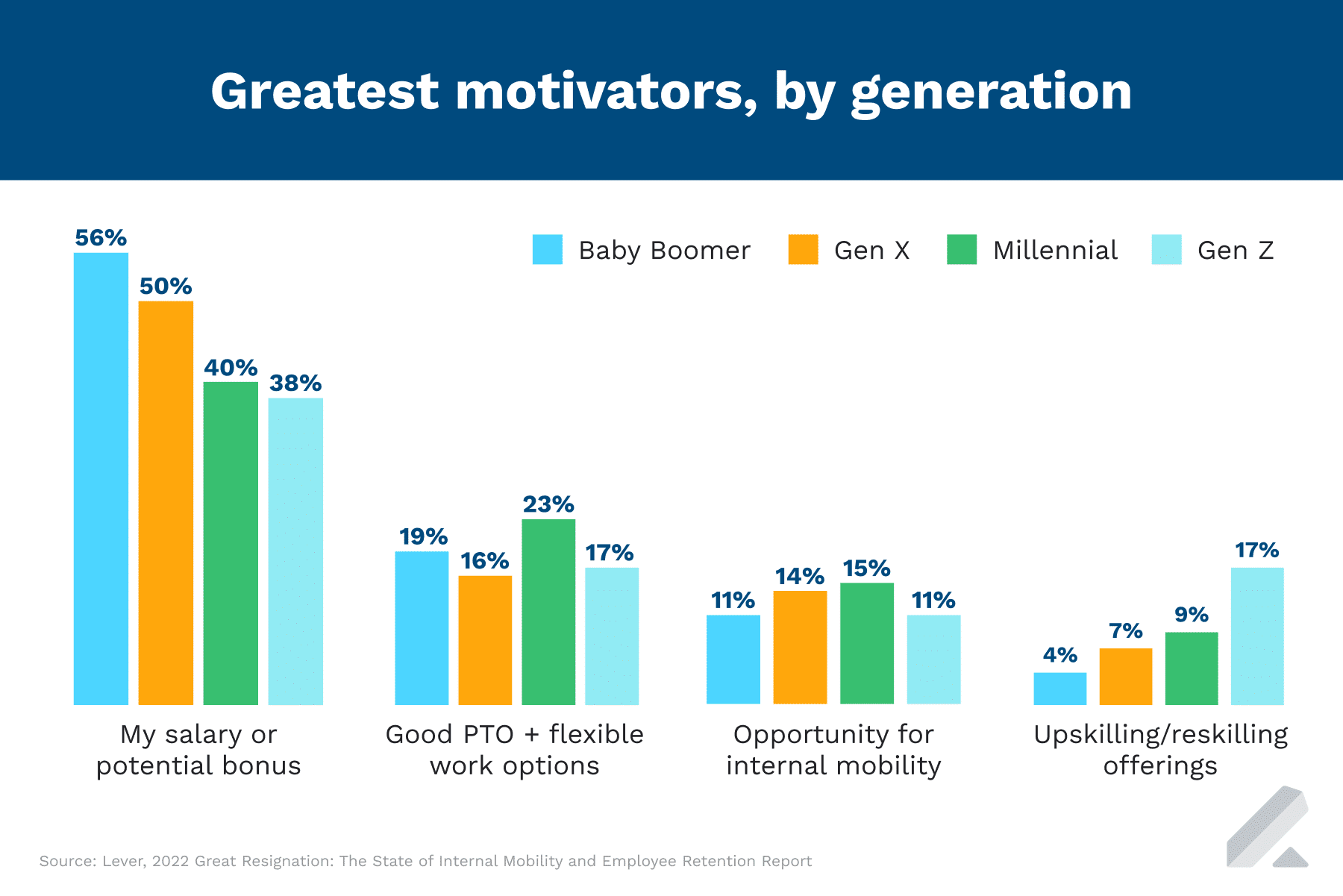
Bringing salaries closer to market norms and offering bonuses helps to avoid losing key employees for financial reasons. Research from Lever shows that salary is the top factor motivating employees to stay — across all generations.
Ideally, this process should be tied to skill and performance evaluations (every 6–12 months). It’s also important to build manager-employee relationships where team members feel empowered to proactively request a salary review — and trust that it will be seriously considered.
Unexpected triggers for changing jobs can include an overly formal environment, lack of feedback, or pressure from a manager. Use regular one-on-ones with your manager, anonymous surveys, and HR check-ins to identify your weaknesses and to determine your team’s mood. All these tools allow you to identify risks at an early stage and build a strategy to mitigate them.
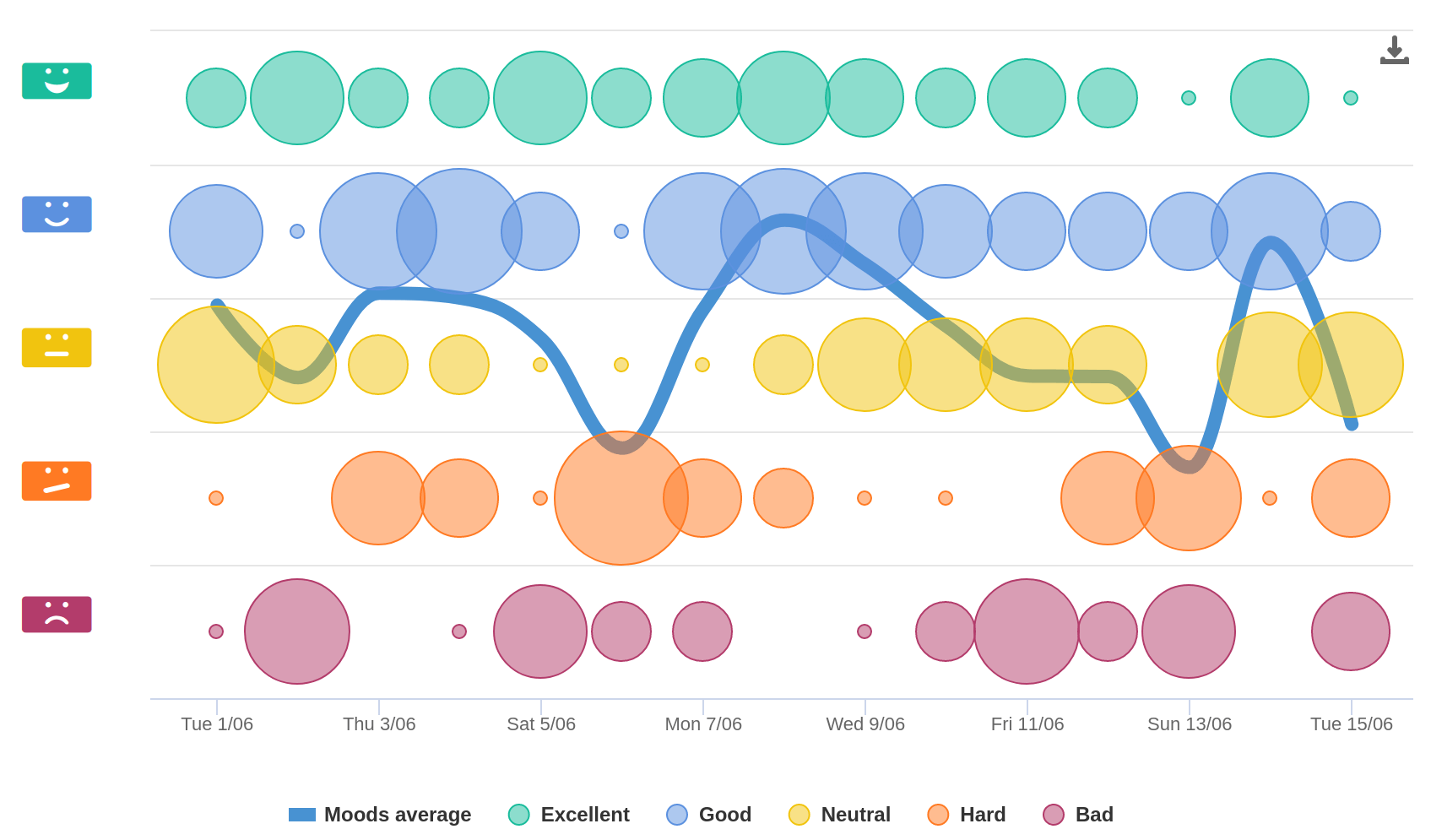
Another tool is monitoring the mood of specialists. Platforms like TeamMood, PeopleForce, and Hurma offer built-in solutions and chatbot integrations for monitoring team sentiment.
Team spirit analytics in the Team Mood service
Retention Focus May Vary by Tenure
In addition, according to a survey of more than 1,000 hiring managers, frequent job changes are becoming an obstacle to hiring for 37% of companies. Understanding this market trend, specialists also change employers less frequently.
Of course, no method will protect you from poaching 100%. But remember, boomerang employees can bring new value — even if someone leaves, it’s worth keeping the door open! Take Steve Jobs, for example: after being fired from Apple in 1985, he returned 11 years later — just in time to rescue the company from near bankruptcy. And it was he who managed to restore its position on the market.


