
Win Candidates’ Hearts with Professional Interviews
Want to make experienced professionals love your company at a first interview? Follow these steps and use at least a couple of these tips to win the hearts of the best candidates. What’s more, you can use this article as a to-do list for recruiters/HR managers.
Preparations for the Interview
- Examine the candidate’s resume carefully. Take a look at their socials. Collect as much information about the person as you can. This will save time for both of you at the interview.
- Get ready with various questions and ask only those that are natural in a specific context. Add to your list only simple and clear questions. Mix biographical questions with professional ones. Think of imaginary situations or issues for the candidate to solve. Focus on their specialty and background, as well as necessary soft skills. However, DON’T:
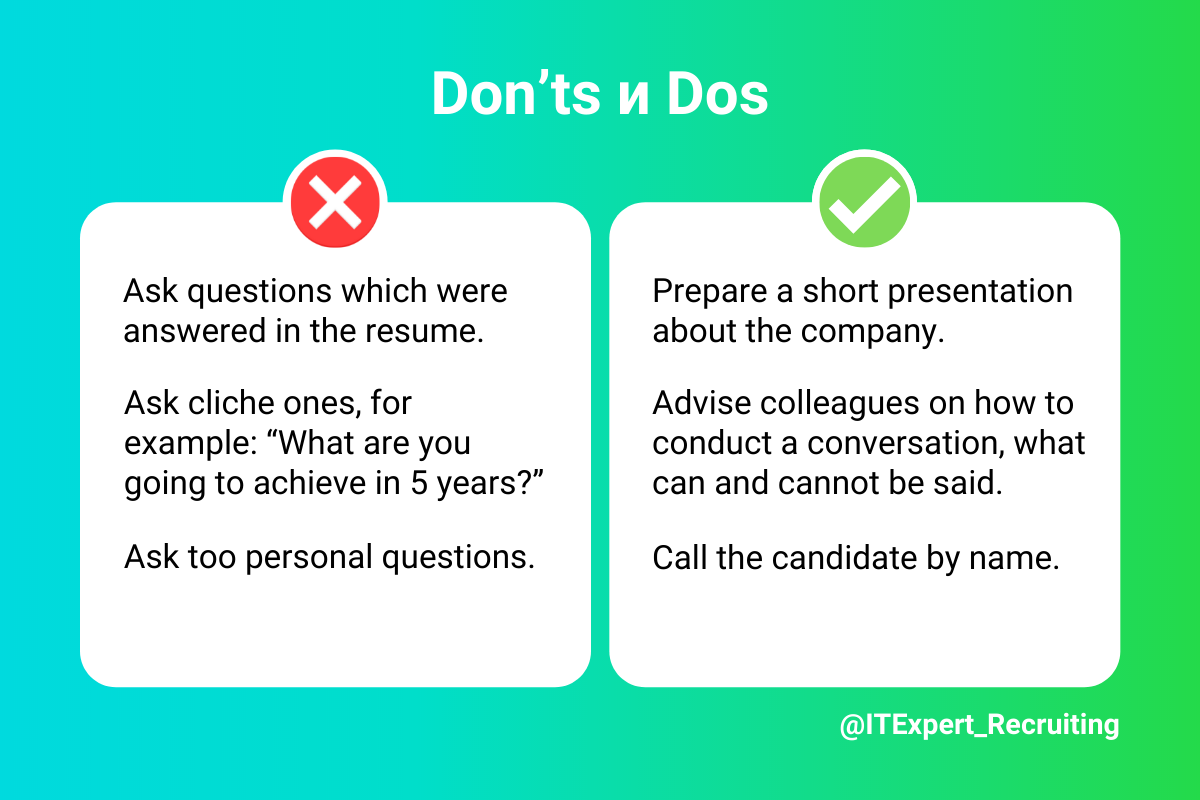
– ask questions which were answered in the resume;
– ask cliche ones, for example: “What are you going to achieve in 5 years?”;
– ask too personal questions. - Prepare a short presentation about the company (this shouldn’t be only a PPTX presentation, but a compelling story about your company’s history, products, projects, team, or anything else. Not only the candidate sells their experience to you, but you’re also selling a company image to them! Include the following to it:
– The information about the product/project and markets you work in.
– New opportunities for the candidate within the company (career growth, education, contests, etc.).
– Details about the team — its size, average age, and so on. Highlight that there is no staff turnover if that’s true.
– Guarantees. Signing job contracts from the first day might ensure stability for a new employee.
– Remuneration. Are salaries at your company good? Do you pay for vacation days and sick leaves? How often do you conduct performance reviews and promotions?
– Bonuses. These might be compensation for meals, sports, events, and other activities.
– Health insurance. It’s becoming a must-have nowadays. Moreover, it’d be perfect if your company offered not only regular insurance but also compensation for psychologist’s consultations.
– Extra activities. Corporate parties, team-building events, online games, anything your company does for employees should be mentioned.
The goal of your presentation is to make the person want to join the team. Make them think: “Yeah, this company is certainly better than others!” - Define who else will take part in the interview. These may be team leaders, C-Suite, HRs, or anyone else. Advise colleagues on how to conduct a conversation, what can and cannot be said, how to behave during the interview. Not all people hire people often and you may share best practices with them.
- Create a schedule, if there will be several colleagues. A perfect job interview is commonly 45-60 minutes long. Check if everyone has time to ask questions.
- Plan your behavior. A recruiter should make a positive impression, as they’re the first person candidates see. Use these simple techniques to establish warm relationships with them:
– Call the candidate by name. Dale Carnegie once said, “A person’s name is to that person, the sweetest, most important sound in any language.” Also, this helps you personalize one’s experience.
– Be serious yet friendly. Sure, your dialogue shouldn’t consist only of jokes — we are all here to do business! Anyway, smiling is essential. Show the interlocutor that you’re not assessing them but willing to help.
– Be honest. If you are impressed by some soft or hard skills of the candidate, let them know about that! Nevertheless, don’t try to please them with flattery.
Don’ts and Dos during an interview
Tips for Holding the Interview
Intro
This part commonly takes up to five minutes.
- First of all, establish contact with a candidate. You might have already done it during the first call, however, it’s always a nice idea to ask a couple of questions about the candidate’s morning/day. Everyone should feel comfortable. In a friendly environment, your communication will be more smooth and productive.
- Introduce all the participants to each other. Mention their roles and main responsibilities at work. Highlight some personal traits of people to emphasize that all those present are friendly, open to new ideas, and generally positive people.
- Outline the main parts of the interview. Tell the candidate who will ask questions first, how much time they are given for presenting themselves, and so on. Remind everyone about the goal of the interview to keep everyone on track.
Keep in mind that you shouldn’t draw conclusions about the candidate based on your first impression. Listen to the end and collect all the information. Sometimes, people with informal style are extremely creative and energetic, and guys who seem too shy might be real math geniuses!
The Main Part
It usually takes 30-35 minutes
- Ask the candidate questions together with the colleagues. This is the most continuous part of every interview.
– Alternate questions and cases to not make your candidate bored. However, don’t overdo with tricky questions to not turn the conversation into surrealism.
– Don’t read them from the list as it is not a job interview but an interrogation. - A recruiter should be an interview moderator, so:
– See if the candidate’s answers are not vague. If they are, ask for clarification.
– Keep the interview pace fairly fast and stop colleagues or the candidate, if they speak for too long.
– If you’re lacking time, ask the candidate for 10 extra minutes or think about what questions you can skip. - Sell the vacancy and the company to candidates. Remember we told you about a short presentation? After you’ve received answers to all the questions, it’s time to tell the candidate more about the team and project they are going to work with.
- Answer the candidate’s questions. This helps you see if the person is interested in the project or just in finding some temporary job. Pay attention to how deep their comments and questions are.
During this part, keep in mind the 80/20 rule. We mean that the candidate speaks 80% of the time, you speak the remaining 20%.
Conclusion
This stage requires no more than 5 minutes.
- Commonly the company representatives offer the next steps:
– Saying “Thanks, we’ll get in touch soon”, if you want to discuss with colleagues the next steps.
– Offering them to do a test task, if the candidate did well.
– Or even sending an offer right after the interview (yeah, such cases are possible!). - Share contacts of people whom the candidate can reach out, in case they want to get more information about the project, team, or company.
Anyway, outline some time frames for further actions. Even if you’re going to refuse, tell the person when they should wait for feedback. After that, spend a couple of minutes writing an email to every candidate. We know that recruiters are extremely busy, but keeping silence is very unprofessional and may harm the company image.
To sum it up, we’d like to remind recruiters that both you and your candidate are assessing each other at an interview. The main point is to realize whether your expectations are met and you suit each other. If there are doubts, take your time and don’t rush with conclusions! You will definitely find a perfect match for the position, as well as every candidate will get a good job in the end. ?
How useful was this post?
Click on a star to rate it!
Average rating 5 / 5. Vote count: 9
No votes so far! Be the first to rate this post.


