







29.09.2026
When Overtime Makes Sense and How to Communicate It Clearly

When deciding where to send their CV, 83% of professionals research a company’s reviews, and for 53% the process of researching the employer begins right after reading the job posting. However, attracting talent and motivating staff isn’t limited to a strong employer brand. What matters is which perks — material and non-material — you offer.
For example, in crises, the main thing is the support of your employees, providing additional sick leave, and helping to equip the home office. Such advantages and benefits constitute the Employer Value Proposition (EVP).
If you haven’t worked on the Employee Value Proposition yet, you can start today! We’ve highlighted what EVP is and how to develop it, using the examples of Airbnb, Netflix, ITExpert, and MacPaw.
Outline:
EVP is a set of advantages and benefits in exchange for the specialist’s knowledge, skills, and experience. The Employee Value Proposition helps both the employee and the candidate answer the question: “Why should I work for this particular company?”.
With a successful EVP, you can attract IT specialists who resonate with your company’s values and corporate culture more effectively. In addition, with a value proposition, the employer will have more relevant candidates. For example, out of the first 100 candidates, about 90 will be more likely interested in working in the company and align with its values.
At the same time, according to research, only a third of employees (33%) believe their employer consistently keeps its EVP promises.
“Value proposition”, “Corporate culture”, and “HR brand/employer brand” concepts are often confused. Let’s explore the difference between these ideas.
1. Corporate culture means how people work and treat each other in and out of the company. It also includes the company’s values and mission. For example, there is an internal document at Netflix that outlines all the principles and requirements of working in the corporation.
One of the points of the company’s internal culture is the policy of trust. If an employee spends money on what he needs for work, the company will return it to him. Refunds are approved in almost 100 percent of cases. The main rule to follow is “Act in Netflix’s best interest”.
For example, one of the Netflix engineers told this story:
“I flew to the conference as a speaker, thinking it was good for the company because I represent our product and Netflix itself. Nobody checked me, did not demand a report, didn’t send me there (to a conference). Then, I added all the expenses for tickets, hotel, etc. into the internal system, and the company returned the money.”
Corporate culture is the starting point before EVP development.
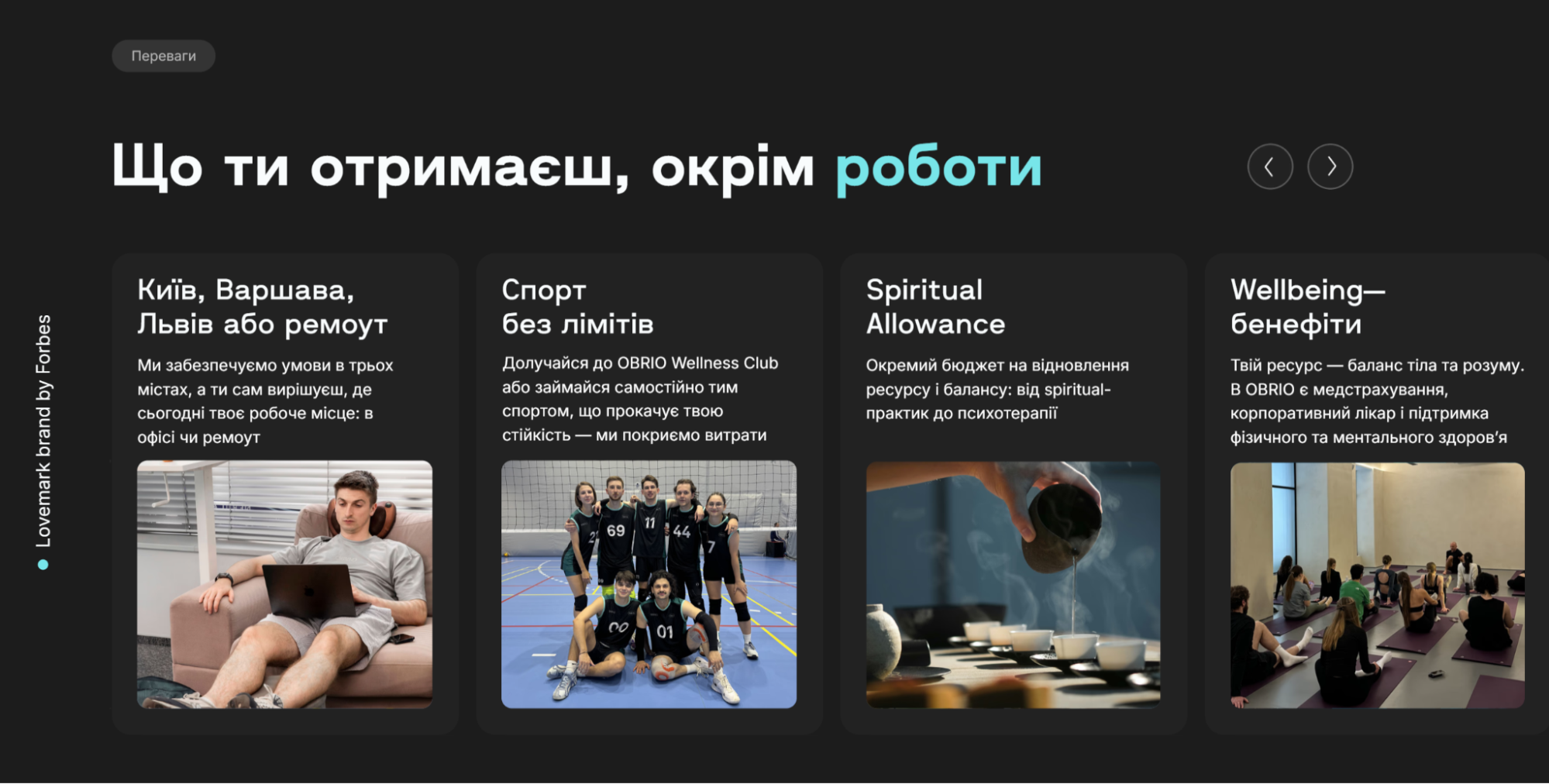
2. EVP is the experience that employees gain, as well as the benefits they get while working for the company. For instance, the company Obrio states on its careers page: “Ready for a challenge? Join us.”
And backs this up with information about exactly what the company does to ensure its employees keep developing and feel comfortable:
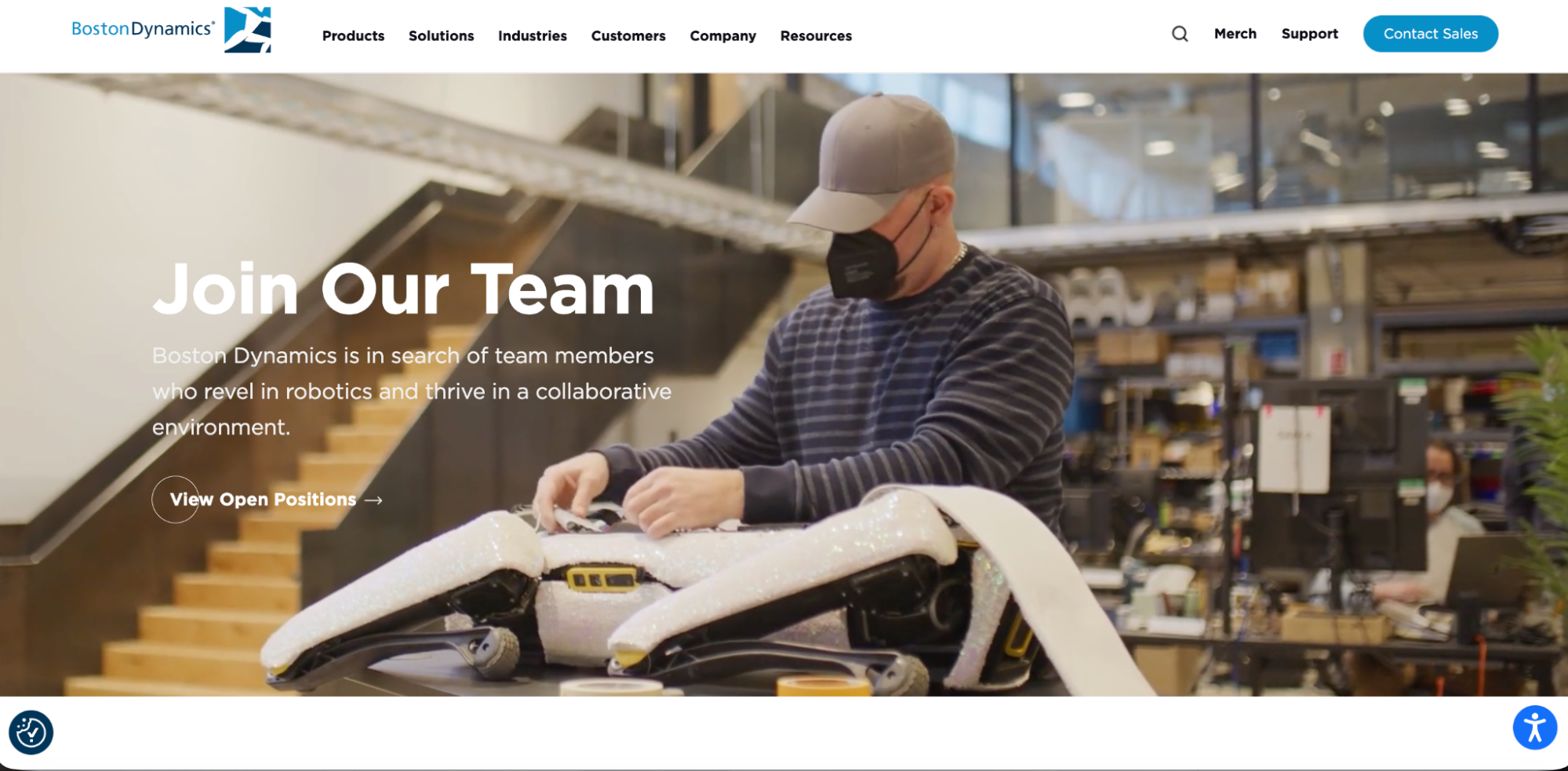
An interesting, non-typical domain can serve as an additional “hook” for a candidate. For example, Boston Dynamics builds its EVP on the uniqueness of the work itself: the niche of advanced robotics. The chance to do truly unique engineering becomes a standalone argument in the company’s favor — especially for engineers tired of product companies with routine tasks.
3. HR brand (employer branding) means the information about the company that the employer broadcasts in various channels to attract and retain the best tech talent.
The value proposition is used within the company. However, to implement it, you need to first survey employees, candidates, and also analyze your competitors. It is based on data, responses, and corporate culture itself. At the same time, the employer brand is about developing an IT company brand, marketing, and the ability to convey information about the company’s values, goals, and benefits for the people who work there.
Nowadays, professionals from all over the world are motivated not only by salary. They strive to grow their careers, offer product ideas, share the company’s values, and feel their importance. And given the 2024 HR Barometer Adare data showing that replacing an employee costs companies an average of €9,500, the conclusion is obvious: a well-thought-out EVP is key to hiring new specialists. Here are four main reasons that prove this once again.
With a well-developed EVP, you will better understand who you are looking for in the company, and who you definitely won’t take on board. For example, if the company is a startup with challenging tasks, you should not consider IT candidates focused on stable work strictly without overtime.
With a successful value proposition, it’ll be easier for you as an employer to hire tech specialists that resonate with your company’s values and internal culture. As a result, the company will get more relevant candidates at the earliest stages of the recruitment process.
EVP reflects the company’s values and mission that help differentiate an organization from its competitors.
Nowadays, you need to attract the best talent, but also retain current IT professionals. An EVP helps to present the company’s benefits besides the salary. By constantly broadcasting business goals and the benefits of working for you, you will allow employees to understand where your business is heading. With competitive advantages and friendly corporate culture, they will think less about moving to other companies.
There are three elements of a company’s value proposition:
The employer’s EVP can also be divided into levels of basic expectations, additional expectations, and the unique benefits of working for the company.
At this level, the specialist wants to be paid a salary within or above the market, as well as wants his direct managers to recognize the achievements and provide feedback on work.
This refers to how management helps build a career or maintain a work-life balance, how many vacation days, paid sick days, maternity or paternity leave provides, etc. This level includes standard working conditions and bonuses for all IT companies.
This level includes something that sets the company apart from its competitors. For example, at Grammarly, employees receive compensation in company stock in addition to salary, and this practice applies equally to both the Ukrainian and American teams. For a candidate, this signals that they become a co-owner of part of the business whose wellbeing directly depends on the company’s success, not just a hired employee. It’s a strong argument that’s absent from most job offers.
And expla, a performance marketing company, set up its own padel club for employees in Warsaw. The company creates a niche tech/product/marketing community where professional networking happens naturally — through the game. Participants are matched by role, company, and skill level, and a party with food and drinks follows the tournament.
There are four steps to creating an employer value proposition:
The following questions will help shape your value proposition: “How do employees evaluate benefits and bonuses now?”, “Which of this list needs to be revised?”, “What is the company lacking now to start attracting employees with the required qualifications?”, “What factors affect the fact that IT workers remain working in the company?”, “What makes key employees leave? What can be improved/changed from this?”
Let’s dive into several examples of employer value propositions for companies that are not looking for talents—specialists find them themselves.
Airbnb unites employees with a mission “Create a world where anyone can belong anywhere”. It is supported by four core values that define how it is to work at Airbnb: inclusion, caring, support, and innovation. The company’s EVP is closely related to the tourism industry. Therefore, Airbnb offers a range of travel benefits: remote work, annual paid trips, accommodation discounts, and paid employee volunteer time.
In 2024, Netflix updated its famous culture memo. This is already the fifth edition in 15 years, a year-long effort that gathered more than 1,500 comments from employees. It’s now structured around four principles:
Co-founder Reed Hastings compares Netflix’s culture not to a symphony orchestra with a strict hierarchy and a carefully rehearsed score, but to jazz — where stable melodic elements exist, but the music itself is created during the performance.
Employees get freedom and responsibility for their decisions, along with context instead of control. A telling example: the company still has no formal policy on expenses or vacation.
Employees of the IT recruiting agency ITExpert follow these values:
Over 10 years on the market, the ITExpert team (32+ recruiters and its CTO) has closed more than 1,000 vacancies for 200+ companies — from Deloitte and Sony to startups that were still picking their name yesterday. A separate and especially challenging direction is MilTech, where the team has filled roles ranging from Embedded, C++, and Computer Vision to radio engineers and circuit designers.
The team structure gives recruiters technical depth: the CTO helps them get into the context of each vacancy and speak the same language as candidates. The company regularly updates its internal knowledge base, runs an internal recruiters’ club, and covers the cost of external events and learning resources. Newcomers go through mentoring and a proprietary technical recruiting course.
Besides health insurance, bonuses, and gifts, ITExpert offers a paid sabbatical: one month for every three years on the team. The company deliberately invested in launching this program because it operates at a very fast pace, and people need proper breaks to stay comfortable and engaged in the profession over the long term.
MacPaw is a product company known for its apps CleanMyMac and Setapp. Its main benefits, built into its EVP:
The company’s values are Make Impact, Create Experience, and Stay Human. According to the founder, they were developed collaboratively by the entire team during a strategy session rather than defined by leadership alone. In DOU’s 2025 survey, MacPaw remained among the most desirable employers for Ukrainian tech professionals.
Constantly measure the success of your EVP—for example by tracking candidate apps or employee turnover rates. Conduct employee surveys to understand what is important to your IT teams. Change the value proposition as needed to meet employee expectations. These tips will help you to become more efficient in hiring talented candidates.


