







23.09.2026
Solution Architect vs. Software Architect: Who Does Your Team Actually Need?

In one of our previous articles, we’ve already explained why a candidate’s ‘No’ doesn’t always mean the final ‘No’. We hope you have already tried these hacks in practice and that has worked! If not, this piece is for you!
Let’s get acquainted with great persuasion techniques commonly used by salespeople. Nevertheless, they work well with every person on Earth and will help recruiters neutralize any candidates’ rejections. Be ready to win over even the most “difficult” job seekers!
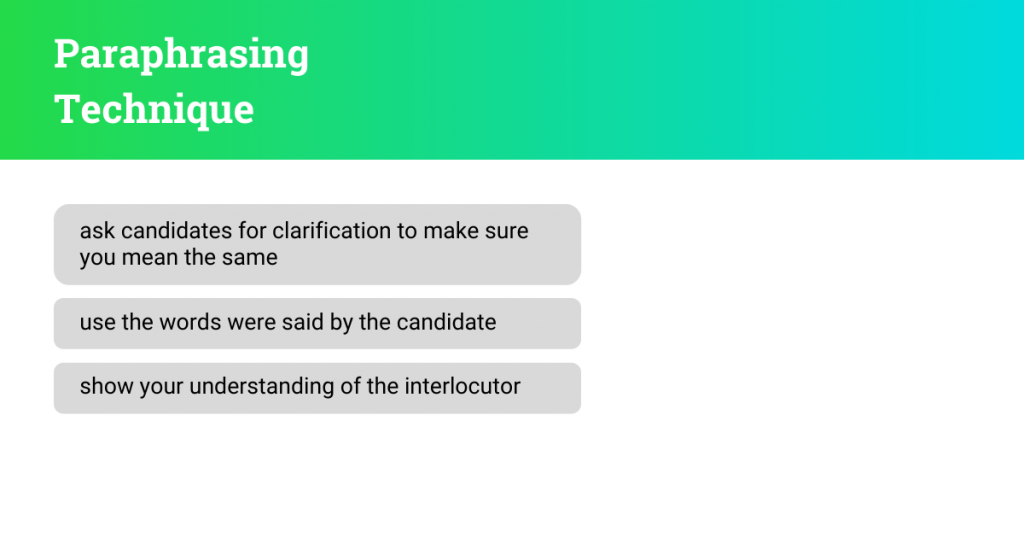
This method origins from human psychology. Our brain better perceives and filters out familiar patterns. You can catch the attention of your interlocutor by using their phrases in your speech.
Also, this helps to eliminate misunderstanding, as very often people perceive simple words differently. For example, a “complex project” may mean different difficulty levels for a recruiter and a job seeker. This leads to the fact that reality does not live up to expectations. As a result, a candidate who has been promised interesting and challenging tasks sees that they will actually be required to do boring monotonous work.
If you come across vague phrases, ask candidates for clarification to make sure you mean the same. Use their own words for that.
Having these questions answered, you’ll know what to offer to make the job seeker want to work for the company.
Also, you will let the interlocutor understand that you are listening and hearing them.
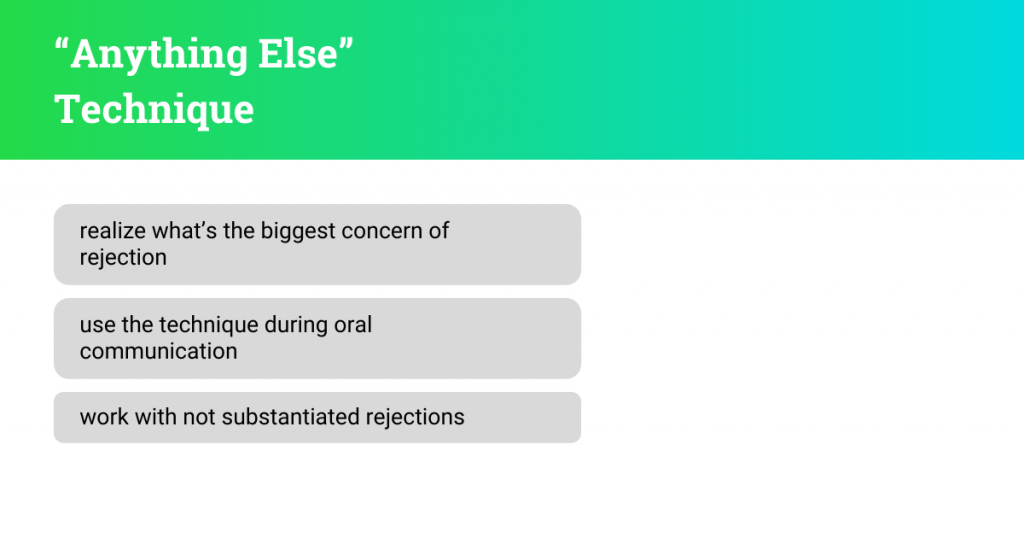
Candidates may have several concerns, so you need to realize what’s the biggest one. Find out all reasons for rejection to analyze all their fears and biases.
Keep in mind that this works better during the interview, not when texting.
So, you see all the candidate’s concerns at once and, based on that, can work with their rejections, which may be not substantiated at all.
You can even create a structured list of all those issues to mention everything important later (responsibilities, team, prospects, salary, social package, education system, vacation, office, their workplace, etc.).
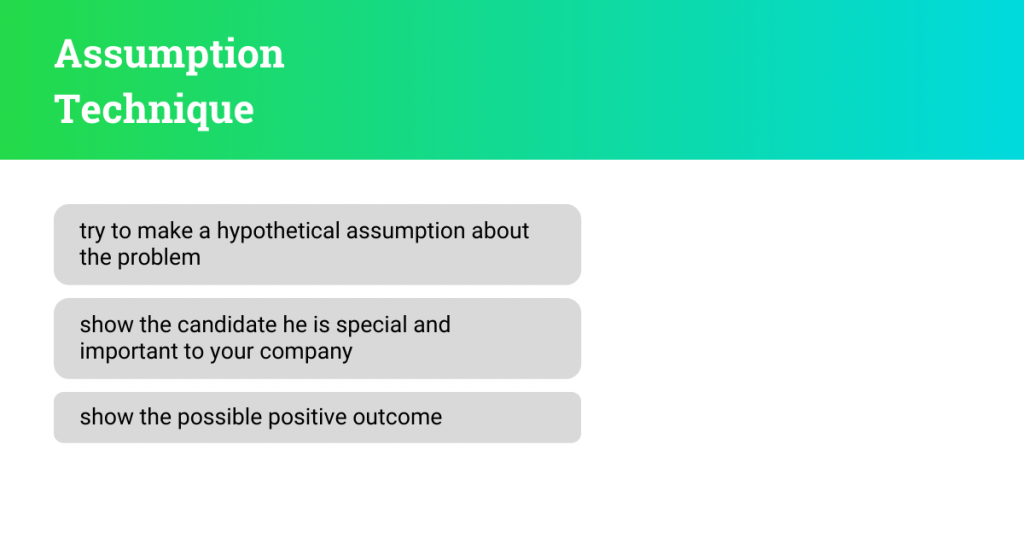
If a candidate rejects the offer due to specific reasons, try to make a hypothetical assumption that the problem preventing the acceptance of the offer has been resolved. This will allow the person to see the possible positive outcome. At least one of their “Yes” will push all “No-s” into the background.
This will also help to get rid of all false rejections and show the person that they are important to you, which means that the company is ready to seek compromises, being impressed by his candidacy.
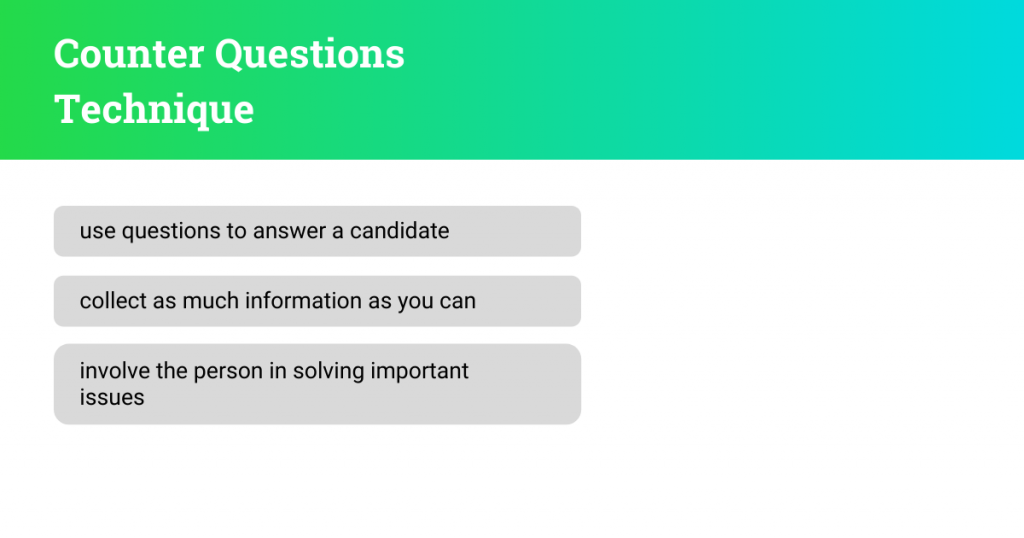
Answer all the candidate’s questions with your own questions. As a result, you will get a summary of the conversation with all the job seeker’s objections and answers to them. Collect as much information as you can to create the best offer for your ideal team member.
In this case, you involve the person in solving important issues, and sometimes allows you to completely neutralize the rejection.
So, you won’t come across rejections, cause candidates will voice all their wishes, and they will have nothing to object to. By the way, this can greatly endear the interlocutor to you. Everyone loves to talk about themselves, their preferences, and wishes.
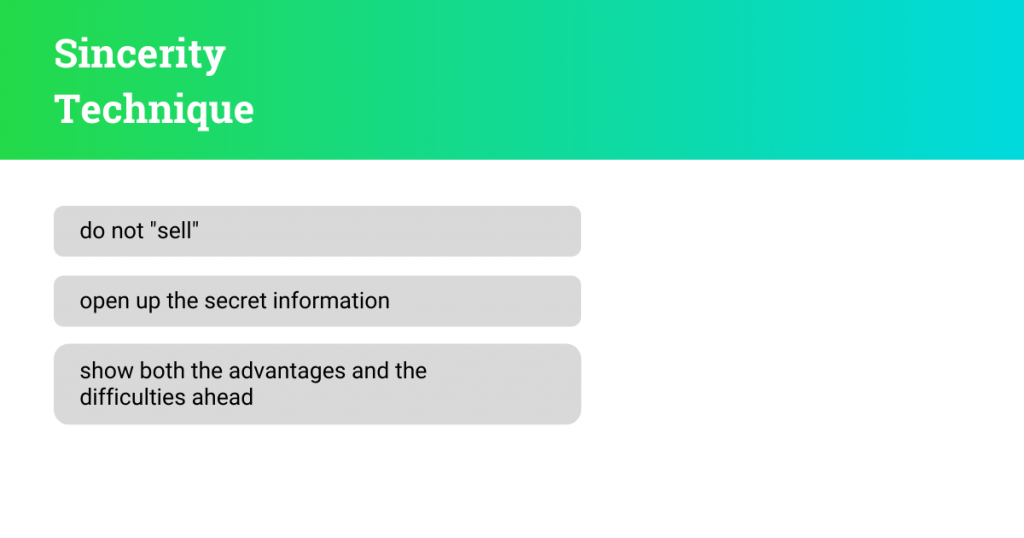
This technique is far from proving the advantages of a vacancy or company, as well as far from overtly selling tone.
You reveal all the cards to the candidate, showing both the advantages and the difficulties ahead. Thus, you provoke them to reciprocity, trying to reveal a true reason for rejection. This technique is based on trust, demonstration of sincerity and concern for the interests and needs of the job seeker.
By “opening up” the secret information in this way, a recruiter demonstrates frankness, and this approach pushes candidates towards reciprocal sincerity. By using this technique, the candidate can tell what is the real cause for their rejection. And this is exactly what the recruiter needs to work with concerns.
Do you use some of the above-mentioned techniques? Which one works better? Feel free to share your experience in the comments!


